Managing Uncertainty, Biases, and Behavioral Intelligence for Occidental Petroleum Employees and Retirees

Healthcare Provider Update: Healthcare Provider for Occidental Petroleum
Occidental Petroleum collaborates with Lyra Health to provide enhanced mental health benefits. This partnership offers employees access to cost-free mental and emotional healthcare, focusing on making effective services convenient and accessible.
Potential Healthcare Cost Increases in 2026
In 2026, healthcare costs for employees at Occidental Petroleum are expected to rise significantly due to various market pressures. A recent forecast indicates an overall increase of approximately 8.5% in healthcare spending, driven by rising hospital and health system operating costs, along with increased demand for behavioral health services. Additionally, if enhanced federal premium subsidies for ACA marketplace plans are allowed to expire, many employees could face drastic hikes in their out-of-pocket costs. This scenario underscores the need for proactive planning and strategic adjustments in employee healthcare benefits amid a shifting economic landscape.
Click here to learn more
As the Iran conflict drives oil prices up 10% and lifts Occidental Petroleum’s market position, employees and retirees of this energy and chemicals producer have a strategic window to strengthen their retirement plan. Rising energy-sector valuations won’t last forever; meeting with a financial advisor now to review your asset allocation, tax positioning, and income strategy lets you capitalize on this moment of strength rather than react after the geopolitical premium fades.
2026 Q1 Oil Market Update (March 2026): Occidental Petroleum (OXY) shares are up approximately +35% over the past 90 days, with an approximate March 2026 average price of ~$72. Occidental Petroleum has been among the standout performers in Q1 2026 as WTI crude prices surged amid the Iran/Strait of Hormuz geopolitical crisis. OXY's high operational leverage to oil prices — combined with Warren Buffett's Berkshire Hathaway holding a significant stake — has driven elevated investor confidence even as oil prices remain volatile following partial ceasefire negotiations.
This article offers general information for Occidental Petroleum employees and retirees and should not be acted upon without obtaining specific advice from a qualified professional. The information is not intended as benefit, investment, tax, or legal advice, nor the solicitation for the purchase or sale of any security.
Financial Decision-making in Extremely Uncertain Times
Making Judgments
Upon years of working with Occidental Petroleum employees and retirees, we have identified several topics that may prove beneficial for you to understand.
Behavioral retirement advice and what it is.
Three highly uncertain historical timeframes.
The brain's decision-making process.
The role of emotional intelligence in better financial decision-making.
Behavioral finance and the role of heuristics.
How to modify behavior – the 4 Rs.
Extreme Turmoil
We will be evaluating financial and retirement decision-making for Occidental Petroleum employees during periods of extreme turmoil.
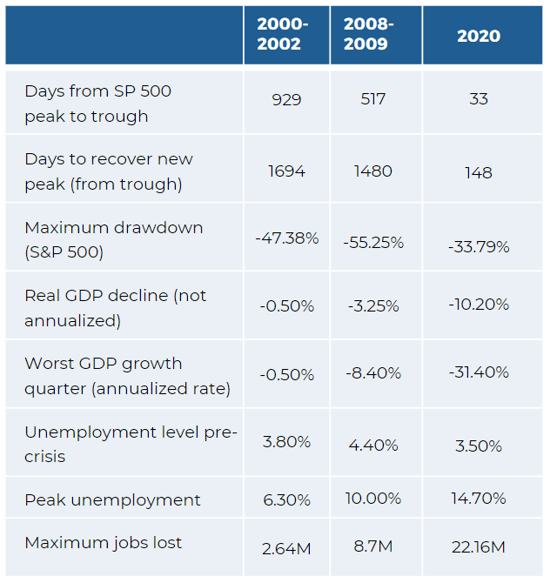
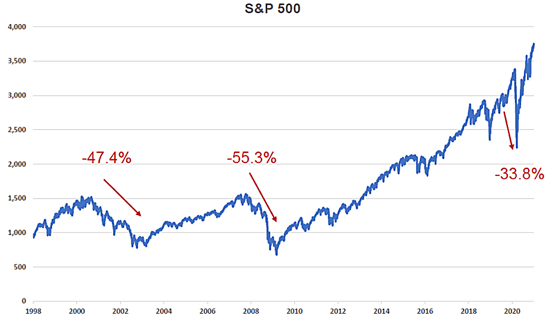
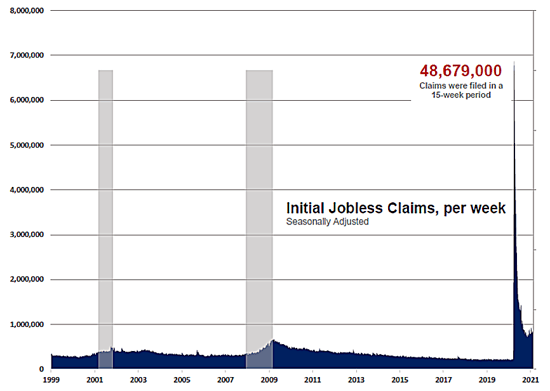
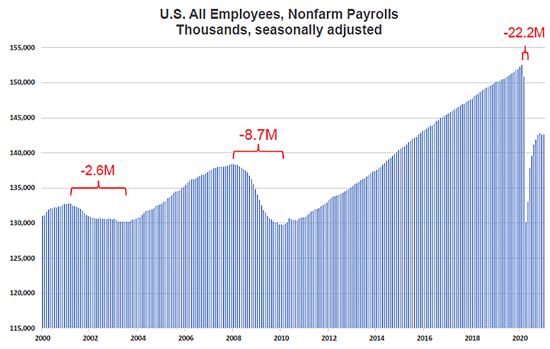
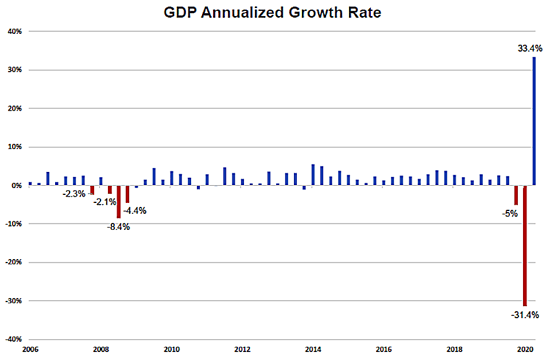
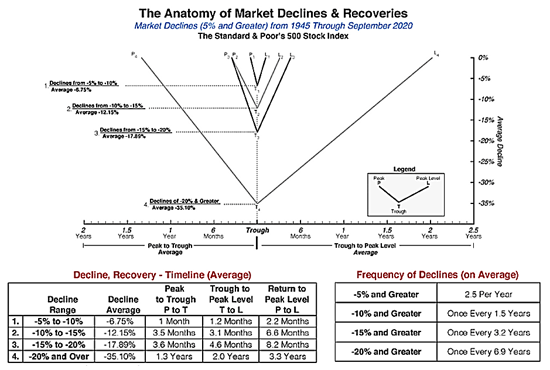
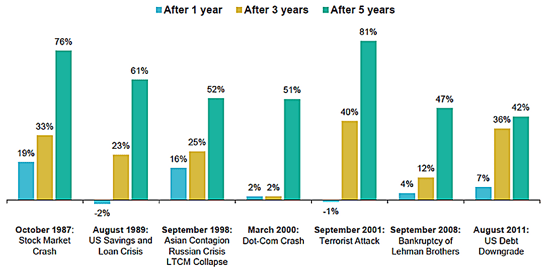
Addressed historical time frames are comprised of events occurring in the past two decades:
2000-2002 –The Tech/Telcom Bubble and 9/11
2008-2009 –The Financial Crisis and the housing bubble
2020-Ongoing–post-pandemic era and downturn
Oil markets have experienced extraordinary volatility in Q1 2026, with WTI crude touching ~$90/barrel in March as geopolitical tensions escalated around Iran's partial closure of the Strait of Hormuz.
For employees holding Occidental Petroleum stock options or restricted shares, the sharp appreciation in energy equity values this quarter creates both tax planning opportunities and potential complications around alternative minimum tax exposure.
Tax professionals advising energy sector employees are urging clients to review their estimated tax payments and withholding as the combination of elevated commodity prices and sector-wide equity appreciation may significantly increase their 2026 tax liability.
Decision-Based Finance
Integrates retirement planning and modern portfolio theory with recent findings in the fields of neuro economics and behavioral finance to achieve an emotional state for making better financial decisions.
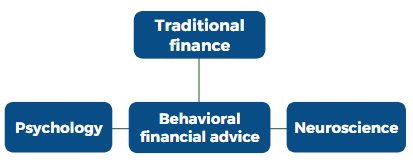
Behavioral Finance Theory
An emerging field confronting us with our deeply irrational selves
The influence of psychology on the behavior of investors and it's subsequent effect on the markets
Help to explain how we make choices and decisions
Conventional Financial Theory
Conventional finance is predicated on the belief that
Both the market and investors are rational and unemotional
Investors make decisions without being biased by emotions
Investors have self-control and are not confused by cognitive errors and information processing errors
Behavioral Finance Theory
Traits of behavioral finance:
Investors are treated as “normal” not “rational”
Investors have limits to their self-control
Investors are influenced by their own biases
Investors make cognitive errors that can lead to wrong decisions
Indices are not available for direct investment. Their performance does not reflect the expenses associated with the management of an actual portfolio. Past performance is not a guarantee of future results. Not to be construed as investment advice. Returns of model portfolios are based on back-tested model allocation mixes designed with the benefit of hindsight and do not represent actual investment performance. See the “Balanced Strategy Disclosure and Index Descriptions” pages in the Appendix for additional information.
“When dealing with people, remember you are not dealing with creatures of logic, but creatures of emotion.”
-Dale Carnegie
Physiology of the Brain
The human brain has not changed much in terms of size and weight
More of history finds humans as hunter-gatherers and farmers
Scanning the horizon for what might eat us was more important than evolving towards making complex financial decisions
Our brains are designed better for these primitive tasks
The Three Sections of the Brain
Outer layer – rational center
It handles complicated, cognitive processes like objective rational decision-making; the cerebral cortex
Middle layer –the emotional center
The limbic system & the amygdala translates outside stimulus into emotions
Inner layer –habit center
Not thinking; we just do it automatically In addition to breathing & body functions, we form habits
Brain Anatomy
Layers of the brain communicate via neural pathways and chemicals
Emotions like fear and anxiety can be so powerful that they have the effect of disabling the rational center of the brain
With stimulus, the brain processes emotions faster than a rational thought
The quality of decisions is impaired when our brains act reflexively
Brain Tendencies
Brains are better wired for survival than to deal with complex financial decisions
The brain has evolved slowly and is better suited to life 10,000 years ago and is not suited to keep up with the changes of the last 100 years
Technology makes it very easy to impulsively spend and invest. Two potentially dangerous things to do impulsively.
Brain Systems
Reward System
Produces Dopamine
Chemical plays a role in motivational component of behavior, we sense pleasure
Preparing the body to fight, flight (flee the danger we are facing) or freeze
Emotional Brain
Stock market volatility
While emotionally painful, is not life-threatening
Our nature is to sacrifice the accuracy of our rational brain for the speed of the emotional brain
Greed ensues when the pleasure of making and spending money creates the desire for more
This is how we can get a closet full of shoes
Adapting Your Brain
The Brain Can Be Changed
We can change how we respond to financial situations
Neuroscientists refer to the brain as “plastic”
Neuroplasticity means we can create new habits so that when faced with challenging financial situations we can respond in ways that are in our best long-term interests
Financial Choices
Most people do not like thinking about finances
Retirement decisions are analytical, cold, and oftentimes abstract
Linking financial decisions to a financial life plan helps people make decisions in the pursuit of a satisfying happy life after Occidental Petroleum.
“Life is 10% what happens to you and 90% how you react to it.”
-Charles R. Swindoll
Emotional Intelligence Development and Maintenance
Emotional Intelligence
The ability to perceive and control one’s emotions and use those emotions to guide thought and behavior
Many experts suggest emotional intelligence correlates better to happiness and success than traditional IQ
IQ vs EI
IQ = Brain Processing Power
EI = Relating & Communicating with Others
Book Smarts vs. Street Smarts
Braininess vs. Savvy
Ei 4 Unique Skill Sets
Self-Awareness
Self-Management
Social Awareness
Relationship Management
Self-awareness is the First Skill Set Required for Achieving Ei
Noticing our emotions and giving ourselves an accurate assessment
Pivotal to understanding ourselves
What is Mindfullness?
Is a tool to help cultivate self-awareness
Emotional self-assessment is easiest when we are alone, quiet, relaxed and inward
Meditation can help cultivate this state
Being mindful benefits
Shown to reduce stress and anxiety
Helps us to accept our experiences
Improves sleep quality
Helps with better concentration
Improves memory
Cultivates greater internal optimism
Engenders self-confidence and self-worth
Engaging in Mindfullness
Focus on breathing, listening (scanning) to your body
Notice thoughts without judgements
Examine underlying assumptions and beliefs
Connect feelings and thoughts for better decision making
Self-Management is the second skill set needed to achieve EI
Use emotions to assist thinking, including changes to our environment
Recognizing the role emotions play in decision making
Investors with good self-management skills have an increased ability to monitor their emotions
They can then be flexible and adaptable when responding to changing situations
Social Awareness is the third skill set in achieving EI
The ability to identify and understand another’s emotions
The nuts and bolts of financial planning and investment management are improved by effective and open dialogue
Better communication improves outcomes
Social Awareness
Having empathy and listening intently fosters self-reflection and openness in the listener
Helps to be able to see others’ contributions and how to effectively build relationships
Fosters better communication between partners/spouses
Relationship Management is the fourth skill set in achieving EI
Effective relationship management involves using EI in interactions to construct positive outcomes
Inspirational leadership
Strategic decision making
Cultivating a team environment
Consensus building
Community connections and strong relationships
Conflict management skills
Financial Self-Control & Self-Management
Financial self-control recognizes that “things” do not equal happiness
Wealth is income not spent, it is deferred consumption
Material consumption can distract us from activities that do improve happiness and quality of life
A simple lifestyle is much easier and less stressful to maintain
Errors and Biases in Decision-Making
Heuristics
Emotional and impulsive decision making relies on certain mental short-cuts to make quick decisions
They rely upon people’s biases developed from:
Life experiences
Preferences
Perspectives
Heuristics Very Commonly Biased
They could lead to incorrect estimates and sometimes serious errors
Used to simplify complex problems that might otherwise require more time and consideration
Recognize your Biases
We all have mental biases; they are short cuts for the many thousands of daily decisions we make
Some mental biases cause us to ignore key information
Or attach too much importance to one piece of information
Or encourage decisions that are misguided by biases
These are entirely natural and unavoidable but the more skilled we are at recognizing these biases, the better our financial decision making
Four Kinds of Bias
Self-Deception– Tricking ourselves into thinking we know more than we do
We are closed off to information that we need to make an informed decision
Simplification– We make shortcuts and oversimplify.
Emotion– Decisions made when we are angry, sad, happy, etc.
Affects the types of decisions we make
Social influence – How we are influenced by others
Myopic Loss Aversion
Most investors suffer from myopic loss aversion
The tendency to compare the performance of their portfolio from the perspective of avoiding a possible loss rather than potential gain
They have a greater sensitivity to losses than gains and a tendency to evaluate outcomes frequently
Don't Overthink
Weighting past experiences too much in decision making
Similarity of objects is confused with the probability of an outcome
Using stereotypes that color decision making
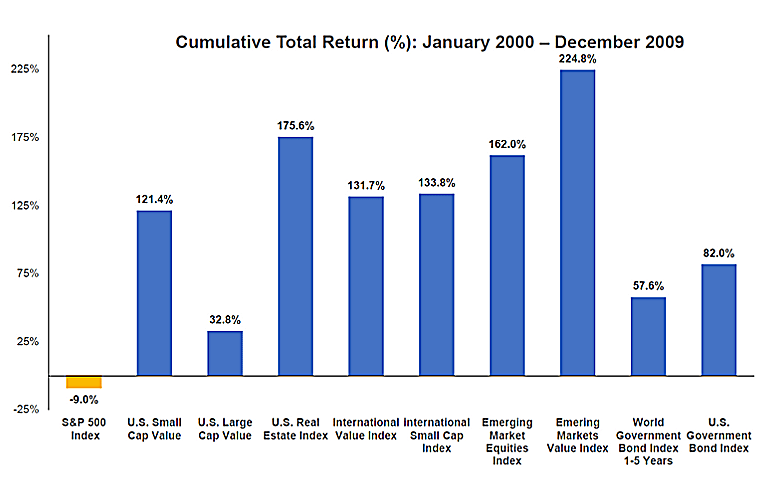
In US dollars. Performance data is historical and does not predict future returns. Indices not available for direct investment. See index descriptions in the appendix.
Don't be Overconfident
Putting too much emphasis on one’s predictive abilities and knowing what the future holds
Illusion of control –people think they have control over a situation when in fact they don’t
Over-Confidence
Timing optimism –where people overestimate how quickly they can accumulate wealth over time, overestimate security selection and market timing
Desirability effect –when people overestimate the odds of something happening because the outcome is preferable to the alternatives “wishful thinking”
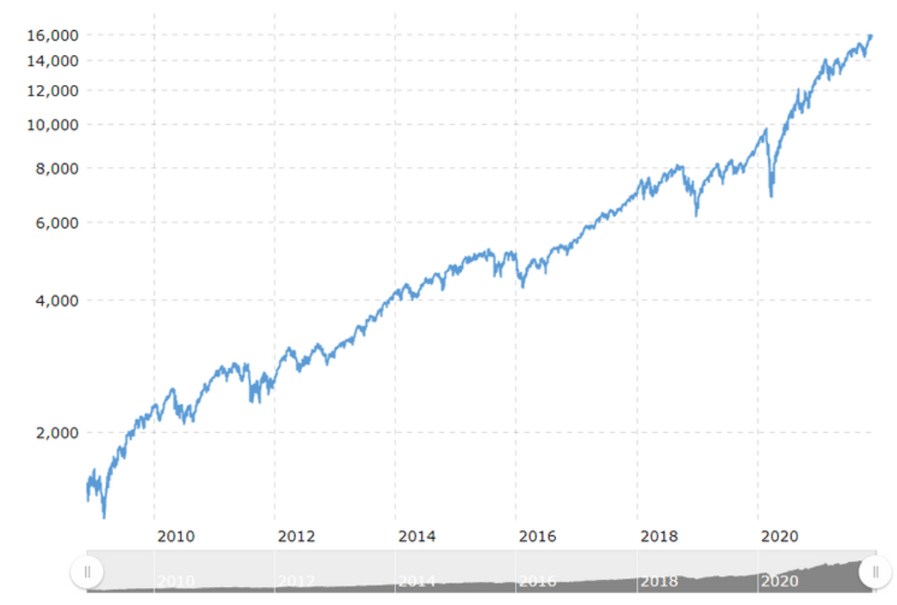
Nasdaq Composite: 2010-2021
Anchoring
Failing to adjust to changing or new information
Heuristic revealed by behavioral finance
Rely too much on pre-existing information and first data points
Confirmation Bias
Look for confirming rather than disconfirming evidence
Looking for information that agrees with us (“echo chamber”)
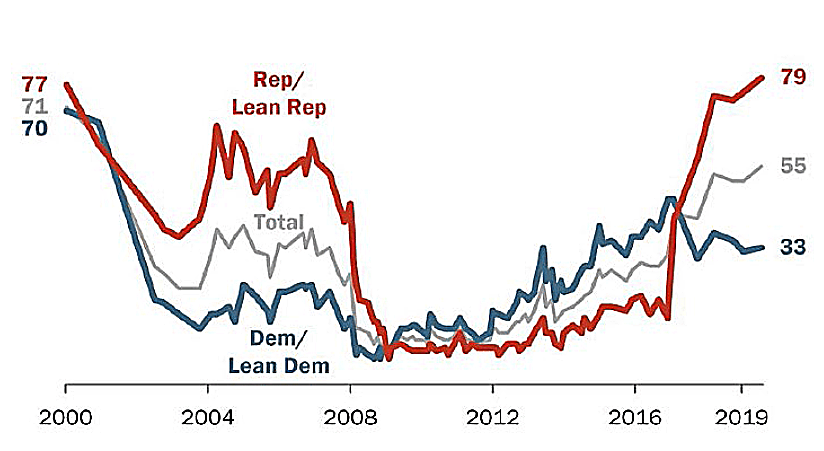
Political Affiliation Influences Economic Perception
Percentage of U.S. adults who rate national economic conditions as excellent or good
Pew Research Center, July 2019, “Public’s Views of Nation’s Economy Remain Positive and Deeply Partisan.”
Heuristics Availability
Describes the way in which people assess the probability of an event by the ease with which they can remember a similar event
The more easily we recall something from memory the more likely it is to be true
The common effect leads us to believe other people think like we do because our opinion dominates our considerations
Illusion of Money
Investors think in nominal results without figuring in inflation
They are making investment decisions while not looking at real returns
Bias Toward the Status Quo
When forced to make a complex decision with uncertainty, people tend to procrastinate and delay their decision
Often happens when it comes to saving for retirement
Doing nothing is easier
The Narrative Fallacy
Make a decision based on the way information is presented as opposed to facts themselves
We love stories and we let our reference for a good story cloud the facts and our ability to make rational decisions
Emotions and Bias: A Dangerous Mix
How is Your Investor Psyche
Risk Tolerance
People who are less worried when taking greater levels of risk are considered to have a high-risk tolerance
People who are less willing to take risk are risk averse
Risk Capacity
A person’s ability to take financial risk based on their financial resources
Financial Capability
Defined as an individual's capacity based on financial knowledge, skills and access to manage resources effectively
Reducing Bias
Decision readiness is impacted by fatigue, distractions, visceral influences and individual differences
To reduce biases, we must modify the decision maker
Spend time educating yourself, take an alternative view and use proven checklists
How to Plan for Uncertain Times
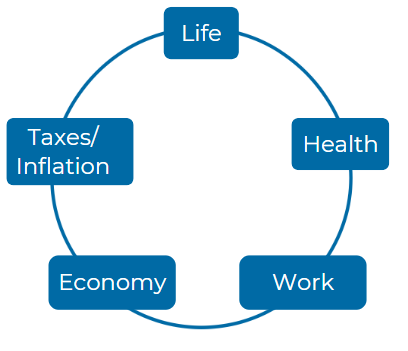
Life is Full of Unknown Variables
There are many things we do not control and admitting this is a necessary first step in being able to plan for it
We cannot know when our life or that of a family member will be significantly changed
We cannot know when our employment will be disrupted
We cannot know what is going to happen with the overall economy, stock/bond market, real estate
Planning for Uncertainty
Most Occidental Petroleum employees desire to make sense out of our lives, so we set goals
Being deliberate about aligning values to goals helps keep us on task toward building a meaningful life
Writing down goals enhances our commitment and makes us responsible for the choices we make
Researchers Say You’re
42% more likely to act on your goals if you write them down.
Certainty in the Face of Uncertainty
There is no shortage of opinions and prognostications, and it is natural to want to know the future, but it is important to know that there is a certainty of uncertainty
Manage resources in an “all weather” way and build in a “margin of error”
Account for the certainty of uncertainty and reduce the temptation of trying to know the future will help to better manage the potential outcomes
How To Protect yourself
Being extremely well-diversified across a variety of financial instruments
Using debt only very prudently
Use insurance to transfer some of the risks of uncertainty to an insurance company
Have a financial plan but know that things will not go exactly according to plan. You’ll change.
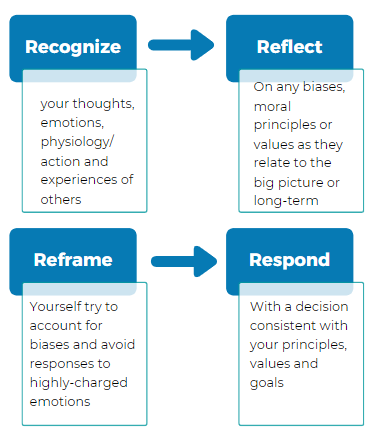
Use the 4R's To Make Decisions from the Inside Out:
Why the 4rs are Important.
We can better balance between the emotional and the rational sections of the brain:
Emotions sacrifice accuracy for spee
Rational thinking is more accurate but not quite as fast
We are hard wired this way, but we can gradually change so we can make better decisions
Be Aware and Recognize
Stop whatever you are doing to take notice of everything you are thinking, feeling and doing
Pay attention to the objective facts surrounding the potential decision
Check Your Awareness
When managing emotions, you begin with recognizing the role they play
As we have learned, they are involuntary and come with physical sensations like heart rate, tension, sweat, etc.
Recognizing this is the key
The act of recognizing gives your rational logic side time to work
Looking back
What values are important and how should they influence the choice?
What biases might be influencing the situation?
Be Aware and Reflect
By increasing awareness of what we are experiencing and how we react to inbound stimulus it helps us perform better
Changing the source of stimulation to something internal that is based on values helps logic take control from emotion
Practicing being reflective is a good part of self-care and going about it intentionally works
Reflection Techniques
Deep breathing is at the heart of most relaxation techniques
Diffusing emotions happens only with several deep and slow breaths
Reflect on the big picture of life, your values and economic reality
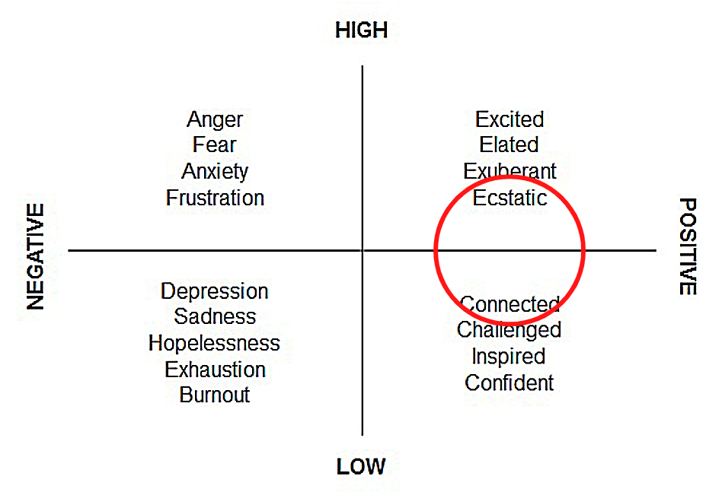
Emotions make exciting opportunities and scary news developments fertile ground for bad decision making
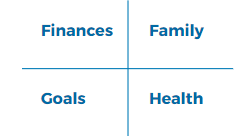
Know your big picture: Finances, Family, Goals, Health
This helps make sure your decisions are not impulsive
Be Real
Your ideas about the situation by stating the most positive, realistic outcome for the decision you are about to make.
Stay True to Yourself
To create positive change, we must change our attitude rather than our circumstances
Learning to look at things in different ways
Admit, using our reflection about our habit patterns to see the big picture helps us to re-interpret whatever financial situation we are in
Stay Present
Emotionally stimulating events tend to tilt ourselves positively or negatively and away from our usual rational mind
Acknowledging that you do not need to predict the future to succeed financially is a valuable first step
Trust Yourself
Most everyone has a baseline:
Positive or negative
Sense of well-being –thriving or struggling
Our own view of our intelligence –high or low
Optimists need to be careful because they get overconfident
Pessimists tend to be overconfident that they know things will not work out well
Both types trust their instincts
The 4 R's Responsivity, Recognize, Reflect and Reframe
Make a decision that is consistent with your values and goals that are properly aligned.
Responsible decisions aligned with our values
The quality of our response is dependent on the quality of the first 3R’s
Recognizing –What am I thinking and feeling?
Reflecting –What biases do I have? What have I not considered? Who is affected and what are the consequences?
Reframing –How realistic is this, and am I too positive or negative?
Financial Security and Sound Decision-Making
Good financial decisions promote happiness
When decisions are in alignment with values it can increase the chance of having a meaningful life
Growing inner life capacities like love, generosity and empathy is better than acquiring more “things” in the external life
Be satisfied with what you have, stop moving the goal post.
Values and Goals Alignment
Aligning values to goals then to behaviors helps you create the best backdrop for finding financial meaning
When we are in alignment, we are at our best
It is an intentional process of doing things on purpose, with purpose
Values are different for everyone
They are an expression of what’s most important
They are an attitude about your life
Behavioral & Goals
Behavior puts the living into our values and goals
Behavior is what we do including our thoughts, emotions and actions
As we already know, emotions sacrifice accuracy for speed
Thus, we must take time to reflect on our values
Write down goals and behaviors that seek alignment between them
Financial Satisfaction
Having the correct amount in cash
Having the correct asset allocation
Feeling free from being debt-free
Monitoring spending and establishing control
Having clear communication with spouse or partner
Investing in an active social life and hobbies
Engaging in social spending versus consumer/materialistic spending
Financial Displeasure
Sustained fear, stress and loneliness will alter biological systems and is bad wear and tear on the mind and body
Sustained happiness is more important than how happy a person is on a single occasion
Emotional vitality is having a sense of enthusiasm, hopefulness and engagement
Negative emotions can harm the body
About The Retirement Group
The Retirement Group is a nation-wide group of financial advisors who work together as a team.
We focus entirely on retirement planning and the design of retirement portfolios for transitioning corporate employees from Occidental Petroleum. Each representative of the group has been hand selected by The Retirement Group in select cities of the United States. Each advisor was selected based on their pension expertise, experience in financial planning, and portfolio construction knowledge.
TRG takes a teamwork approach in providing the best possible solutions for our Occidental Petroleum clients’ concerns. The Team has a conservative investment philosophy and diversifies client portfolios with laddered bonds, CDs, mutual funds, ETFs, Annuities, Stocks and other investments to help achieve their goals. The team addresses Retirement, Pension, Tax, Asset Allocation, Estate, and Elder Care issues. This document utilizes various research tools and techniques. A variety of assumptions and judgmental elements are inevitably inherent in any attempt to estimate future results and, consequently, such results should be viewed as tentative estimations. Changes in the law, investment climate, interest rates, and personal circumstances will have profound effects on both the accuracy of our estimations and the suitability of our recommendations. The need for ongoing sensitivity to change and for constant re-examination and alteration of the plan is thus apparent.
Therefore, we encourage you to have your plan updated a few months before your potential retirement date as well as an annual review. It should be emphasized that neither The Retirement Group, LLC nor any of its employees can engage in the practice of law or accounting and that nothing in this document should be taken as an effort to do so. We look forward to working with tax and/or legal professionals you may select to discuss the relevant ramifications of our recommendations.
Throughout your retirement years we will continue to update you on issues affecting your retirement through our complimentary and proprietary newsletters, workshops and regular updates. You may always reach us at (800) 900-5867.
What are the key provisions of the Occidental Petroleum Corporation Retirement Plan that employees should understand to maximize their benefits, and how does the company structure its contributions relative to employees' earnings? As employees of Occidental Petroleum Corporation consider their retirement planning, it's vital to grasp how the company's contributions function, particularly concerning the wage base and annual earnings limits.
Key Provisions of the Occidental Petroleum Corporation Retirement Plan: The Occidental Petroleum Corporation Retirement Plan is fully funded by the company, with contributions based on an employee's annual earnings. The company contributes 7% of annual earnings up to the Social Security wage base ($137,700 in 2020) and 12% on earnings above the wage base. This structure is designed to help employees build substantial retirement savings. The plan's benefit limits align with IRS regulations, and employees should be aware of how these contributions are applied based on annual earnings limits to maximize their benefits(Occidental_Petroleum_Co…).
How can Occidental Petroleum Corporation employees manage their investment options within the Retirement Plan, and what resources does the company provide to help them make informed decisions? The investment options available through the Occidental Petroleum Corporation Retirement Plan serve as a significant tool for employees wishing to tailor their retirement savings according to their financial goals and risk tolerance. Understanding these options can be complex and requires an in-depth exploration of available funds, associated risks, and projected performance.
Managing Investment Options: Occidental Petroleum employees have control over how contributions to their Retirement Plan are invested. The plan offers various investment funds, including bond and stock market index funds, and target date funds. Employees can manage their investment elections through the online platform, oxy.voya.com, which also provides fund performance data and advice resources, such as Online Advice and Professional Management services, to assist employees in making informed decisions(Occidental_Petroleum_Co…).
In what ways do vesting schedules impact employees' retirement benefits at Occidental Petroleum Corporation, and what rights do employees have under the Employee Retirement Income Security Act (ERISA) regarding these benefits? Navigating the vesting schedule can make a profound difference in the go-forward retirement landscape for employees. Occidental Petroleum Corporation offers a structured approach to vesting, impacting when benefits are owned outright, and understanding the implications of ERISA for retirement planning is essential for all employees.
Impact of Vesting Schedules: Occidental Petroleum's Retirement Plan vests fully after three years of service. Employees are always fully vested in any Rollover accounts. Vesting schedules impact when employees can fully claim their retirement benefits, with protections under ERISA that guarantee the right to earned benefits. Employees who leave before vesting forfeit the nonvested portion of the company’s contributions(Occidental_Petroleum_Co…)(Occidental_Petroleum_Co…).
What are the distribution options available for employees of Occidental Petroleum Corporation when they reach retirement age, and how do these options affect their financial planning? The variety of distribution options at Occidental Petroleum Corporation can create a much more personalized retirement plan, allowing employees to consider how best to receive their benefits while factoring in tax implications and future income needs.
Distribution Options at Retirement: Employees reaching retirement age (60) have multiple distribution options from the Retirement Plan, including lump sum payments and annuity options. These choices impact financial planning, as each option has different tax and income implications, allowing employees to tailor their benefits to their future financial needs(Occidental_Petroleum_Co…)(Occidental_Petroleum_Co…).
How does Occidental Petroleum Corporation support employees who experience disability, and what provisions are in place for continuing retirement contributions during such periods? Understanding the support structure provided by the company, specifically in relation to short-term and long-term disability, is crucial for employees who may find themselves in unexpected circumstances. It’s important for them to know whether retirement contributions will continue during their disability or if they might need to make adjustments to their financial planning.
Disability and Retirement Contributions: Occidental Petroleum continues to contribute to the Retirement Plan if an employee is receiving short-term disability benefits. The contributions are based on the employee's actual pay during the disability period. This provision ensures that retirement savings can continue during times of temporary disability, supporting long-term financial planning(Occidental_Petroleum_Co…).
How can employees at Occidental Petroleum Corporation ensure their beneficiary designations remain current and what are the implications of these designations for estate planning? The process of maintaining accurate beneficiary designations is critical for the smooth transition of retirement benefits, and employees must be aware of how changes in personal circumstances can impact these designations.
Beneficiary Designations: Employees should regularly update their beneficiary designations to ensure their retirement benefits are directed as desired upon their death. Changes in personal circumstances such as marriage, divorce, or the death of a previously designated beneficiary should prompt an update. Failure to do so may result in unintended allocations(Occidental_Petroleum_Co…)(Occidental_Petroleum_Co…).
What are the specific eligibility requirements for the Occidental Petroleum Corporation Retirement Plan, and how do these requirements differ for various employee categories, such as full-time versus part-time employees? Recognizing the nuances of eligibility criteria within the retirement plan is essential for employees to understand when they can begin to participate and what contributions may apply, especially if they transition between roles.
Eligibility Requirements: Full-time and part-time non-union employees and some union-represented employees are eligible to participate in the plan. Contributions begin automatically on the first day of the month of employment or eligibility. Understanding the specific eligibility requirements, especially for employees transitioning between full-time and part-time roles, ensures accurate participation and benefit accumulation(Occidental_Petroleum_Co…).
How can employees reach out to Occidental Petroleum Corporation for assistance regarding their Retirement Plan benefits, and what are the best practices for ensuring their inquiries are addressed promptly? Effective communication with the company is key during the retirement planning process. Employees should know how to navigate company channels to maximize their understanding of benefits available to them.
Contacting Occidental Petroleum for Assistance: Employees can manage their retirement plan and address inquiries through the Oxy Retirement Service Center and the oxy.voya.com platform. Best practices for ensuring prompt responses include using the appropriate online tools and staying informed about plan updates and changes(Occidental_Petroleum_Co…).
What are the tax implications of distributions from the Occidental Petroleum Corporation Retirement Plan, and how can employees plan accordingly to minimize their tax burden during retirement? Having a comprehensive understanding of how taxes will impact withdrawals is crucial for employees as they strategize their retirement income, and these tax considerations can play a significant role in long-term financial planning.
Tax Implications of Distributions: Distributions from the Occidental Petroleum Retirement Plan are subject to standard federal and state taxes, including required minimum distributions (RMDs) starting at age 72. Employees should consider consulting a tax advisor to minimize tax burdens and maximize retirement income by understanding the specific tax consequences of various distribution options(Occidental_Petroleum_Co…).
How does Occidental Petroleum Corporation's retirement plan structure address the needs of employees transitioning from active service to retirement, particularly in terms of investment performance and management of existing accounts? As employees consider retirement, they should be well-informed about how the company manages contributions already made, ensuring that their investment strategy aligns with their anticipated retirement lifestyle and goals.
Transition from Active Service to Retirement: Occidental Petroleum supports employees transitioning to retirement by continuing contributions and offering a range of investment options that align with long-term financial goals. This structure allows employees to manage their investments effectively during retirement, ensuring that the plan remains aligned with their financial objectives(Occidental_Petroleum_Co…).
With the current political climate we are in it is important to keep up with current news and remain knowledgeable about your benefits.
Occidental Petroleum offers both a traditional defined benefit pension plan and a defined contribution 401(k) plan. The defined benefit plan includes a cash balance component, where benefits grow based on years of service and compensation, with interest credits added annually. The 401(k) plan features company matching contributions and various investment options, including target-date funds and mutual funds. Occidental Petroleum provides financial planning resources and tools to help employees manage their retirement savings.
Operational Changes: Occidental Petroleum is restructuring its business to focus more on its core oil and gas segments, leading to layoffs affecting around 1,200 employees (Source: Reuters). Strategic Initiatives: The company aims to enhance operational efficiency and reduce costs. Financial Performance: Occidental reported a 15% increase in net sales for Q3 2023, driven by strong demand for its oil and gas products (Source: Occidental Petroleum).
Occidental Petroleum includes RSUs in its compensation packages, vesting over a specific period and converting into shares. Stock options are also provided, enabling employees to buy shares at a predetermined price.
Additional Articles
Check Out Articles for Occidental Petroleum employees
For more information you can reach the plan administrator for Occidental Petroleum at 5 greenway plaza Houston, TX 77046-0506; or by calling them at 713-215-7000.
Occidental Petroleum Corporation is an American company engaged in hydrocarbon exploration in the United States, the Middle East, and Colombia as well as petrochemical manufacturing in the United States, Canada, and Chile