New Update: Rising Oil Costs are Affecting Retirement Plans. Will you be impacted?
How Are Verizon Employees Impacted by Inflation & Rising Interest Rates?



Barron’s: Awarded on 9/12/2025 (Mega RIA) for 6/30/24-6/30/25. Paid for logo use. Forbes: Awarded 10/1/25 for 3/31/24-3/31/25. Paid for logo use. USA Today: Awarded 4/15/26 for the five-year period ending January 2026. Paid for logo use.
| Company Name | For plan years beginning in | Year | Month | First Segment | Second Segment | Third Segment | Plan Type |
| Verizon | All | 2025 | January | 4.74% | 5.55% | 5.92% | |
| Verizon | All | 2024 | January | 4.89% | 5.14% | 5.29% |
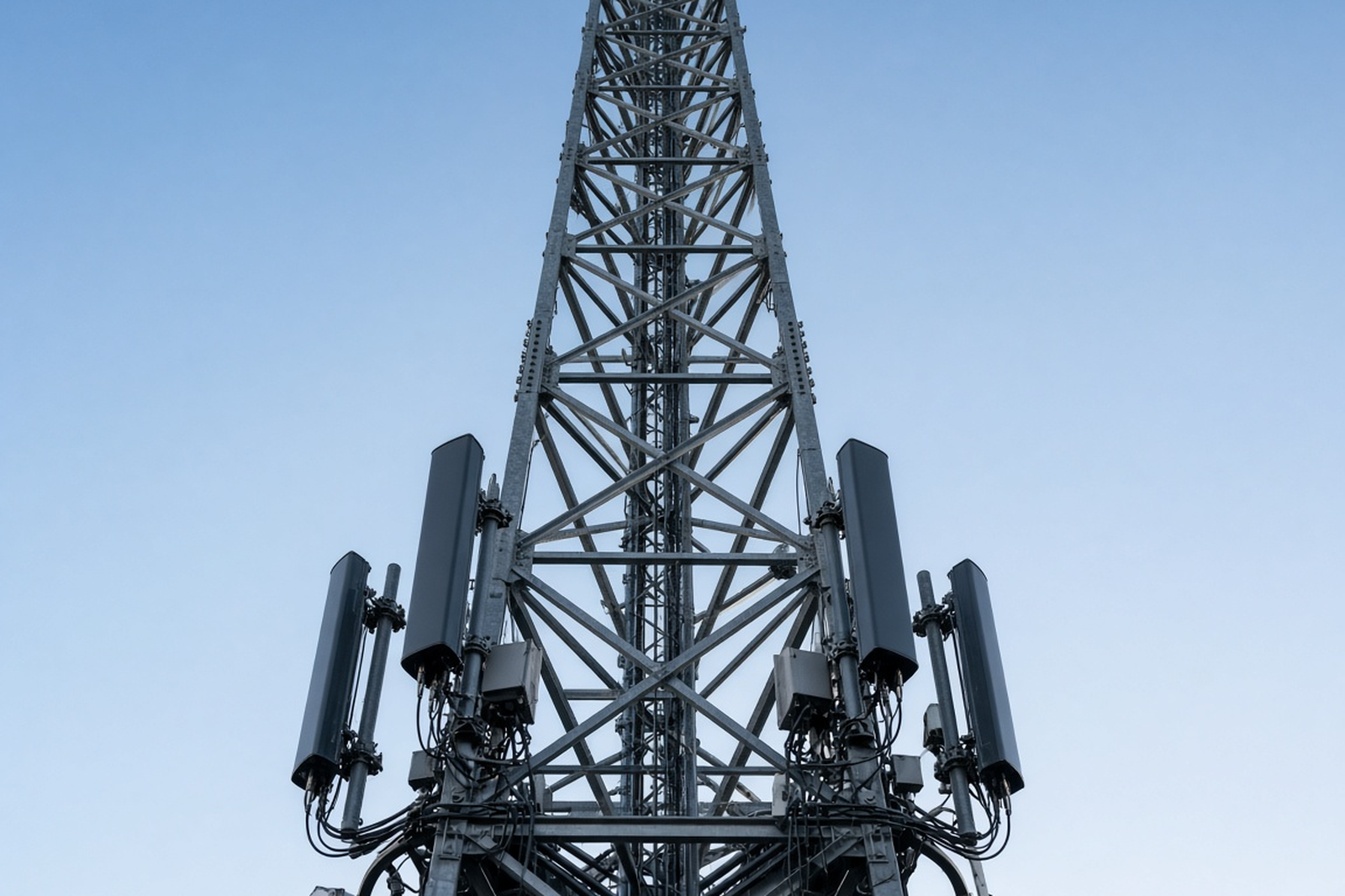
Oil market turbulence continues to ripple through the broader economy, with crude swinging between $50 and $120 per barrel and annualized volatility near 80%. Fleet fuel for service vehicles, backup generator diesel, and cell tower energy consumption connect telecom infrastructure operations to crude oil price movements. For Verizon employees focused on long-term financial health, periods of oil-driven economic volatility reinforce the value of diversified strategies that account for how energy markets influence the broader investment landscape. A financial advisor can help you build strategies that maintain progress toward retirement goals through periods of energy-driven economic turbulence.
In 2022, news headlines were plastered with “HISTORICAL INFLATION RATES” and “HIGHEST INFLATION RATES IN THE LAST 39 YEARS.” As an employee of Verizon , what does this actually mean for you as you approach retirement?
First off, let us define what inflation is. Inflation is known as the increase in general price levels of goods and services. Inflation is measured through the CPI, the Consumer Price Index, which is produced by the Bureau of Labor Statistics. The U.S. Bureau of Labor Statistics found that a gallon of whole milk cost $3.66, about 8% more than the prior year's price of $3.38 per gallon. Combined with the other goods and services, we would find an average increase in prices and calculate how much prices have increased within a given time period. Normally, the Federal Reserve targets an inflation rate of 2%, and for long stretches inflation stayed fairly close to that, only off by about a half percentage point. However, in 2021, the annual inflation rate was 7%, drastically different from the 1.4% increase in 2020 and the 2.3% increase in 2019 . To put this in perspective, CPI grew at a cumulative 5.7% over that period. So within a single year, inflation grew faster than the three years prior.
Inflation is an expected occurrence and many people who retire tend to expect a consistent rate over their life span and calculate their retirement expenses with this in mind. However, these calculations quickly change when there are abrupt increases in inflation. Unexpected inflation can have devastating effects on a Verizon employee’s savings as it whittles away at your spending power faster than you expect it to. Today, you might be able to buy groceries within a certain budget, but during an inflation spike, groceries will outpace your budget and soon enough, you’ll find yourself spending considerably more for your normal grocery bundle.
In order to control the rapid rise of inflation, the Federal Reserve uses interest rates to dissipate inflationary pressures. As interest rates increase, inflation generally decreases. This relationship is caused by how interest rates affect the rate of borrowing money. When interest rates are low, people will borrow money as they pay less in interest. This fuels the economy and increases inflation. As interest rates rise, people will borrow less and the markets will move slower as there is less fuel to add to the fire. These factors go hand in hand in an economic balancing act.
You may be wondering: “How does this affect my Verizon pension? Should I be choosing lump-sum or annuity?” As pension lump sum amounts are calculated using the current interest rates, choosing lump-sum versus annuity can be a difficult decision. Since lump-sum pensions are inversely affected by interest rates, the higher interest rates rise, the less you will receive from your Verizon lump-sum pension. As interest rates rise however, annuity pensions become a lot more attractive as they use current interest rates to calculate your lifetime monthly payments.
In 2021, healthcare costs lagged behind the country’s 7% inflation rate, rising only 2.5% that year. However, we are seeing a labor shortage in the healthcare sector, which can lead to a rise in wages to attract workers and would ultimately increase prices and insurance premiums for patients. Many Verizon retirees typically rely on Medicare to support them in their healthcare costs, however, Medicare rarely covers all costs and patients are required to pay a premium on top of out-of-pocket expenses. These premiums will increase as inflation continues to increase, leading to an overall increase in expenses for healthcare. In 2026, the standard monthly Medicare Part B premium was $202.90. Even though, as a whole, healthcare costs have not risen in line with inflation, we have seen very high inflation for those nearing or at retirement age.
With increasing prices in drug expenses and Medicare premiums, the Employee Benefit Research Institute (ERBI) found in their report that couples with average drug expenses would need $296,000 in savings to cover those expenses in retirement - a 10% increase from the year prior. Couples with higher drug expenses would need $361,000 to cover those healthcare costs - an 11% increase from the year prior.
Overall, the landscape of the economy is rapidly changing and these recent developments have been shifting people’s expectations and forecasts for retirement. Understanding how inflation and interest rates will affect your retirement is a vital step in crafting a successful retirement plan.
Which Verizon Benefits Matter When Inflation and Interest Rates Rise?
Inflation and rising interest rates are a cue to review retirement benefits from Verizon. Verizon's Savings Plan for Management Employees fully vests a participant in employer-matching and profit-sharing contributions, including those in the participant's ESOP account, and any income on them, after three years of vesting service or upon death, disability, retirement from Verizon, reaching normal retirement age, or involuntary termination other than for cause. Eligible employees' contributions to certain Verizon 401(k) savings plans are matched by Verizon at a percentage of those contributions, using shares of Verizon common stock from one of its four leveraged employee stock ownership plans (ESOPs).
Besides its Savings Plan for Management Employees, Verizon runs separate 401(k) savings plans for its Mid-Atlantic Associates, its New York and New England Associates, and its West Region Hourly Employees. Reading these plan details carefully is a useful step before you decide when and how to retire.
- Corporate Employees: 8 Factors When Choosing a Mutual Fund
- Using an Escrow Account for Joint Tax Risks in a Divorce
- Medicare Open Enrollment for Corporate Employees: Cost Changes
- Stages of Retirement for Corporate Employees
- 7 Things to Consider Before Leaving Your Company
- How Are Workers Impacted by Inflation & Rising Interest Rates?
- Lump-Sum vs Annuity and Rising Interest Rates
- How Interest Rates Affect Your Pension Lump Sum
- Corporate Employees: Do NOT Believe These 6 Retirement Myths!
- 401K, Social Security, Pension: How to Maximize Your Options
- Have You Looked at Your 401(k) Plan Recently?
- Questions You Should Ask Yourself When Planning for Retirement
- Preparing for Job Automation and Layoffs

Full Interest Rate update table for Verizon employees
| Company Name | For plan years beginning in | Year | Month | First Segment | Second Segment | Third Segment | Plan Name |
https://www.verizon.com/documents/pension-plan-2022.pdf - Page 5, https://www.verizon.com/documents/pension-plan-2023.pdf - Page 12, https://www.verizon.com/documents/pension-plan-2024.pdf - Page 15, https://www.verizon.com/documents/401k-plan-2022.pdf - Page 8, https://www.verizon.com/documents/401k-plan-2023.pdf - Page 22, https://www.verizon.com/documents/401k-plan-2024.pdf - Page 28, https://www.verizon.com/documents/rsu-plan-2022.pdf - Page 20, https://www.verizon.com/documents/rsu-plan-2023.pdf - Page 14, https://www.verizon.com/documents/rsu-plan-2024.pdf - Page 17, https://www.verizon.com/documents/healthcare-plan-2022.pdf - Page 23
Help shape our next stories
Choose the topics you’d love to read more about. Your input helps us focus on content that matters to you.