




<img height="1" width="1" style="display:none" src="https://www.facebook.com/tr?id=314834185700910&amp;ev=PageView&amp;noscript=1">

Retirement Guide for ExxonMobil Employees

2026 Tax Rates, Health Care Updates, Interest Rates, Pension Plan, and more

⚠️ Q1 2026 Oil Market Alert - What ExxonMobil Employees Should Know Before Retiring

ExxonMobil shares hit an all-time high in late March 2026 as the Strait of Hormuz crisis drove Brent crude to ~$126/barrel at its peak before settling near $106 making Q1 2026 one of the most significant quarters in recent memory for employees holding XOM equity in their retirement accounts.

XOM 90-Day Return ~+25%
March 2026 Avg. Price ~$162/share (all-time high ~$176)
Brent Crude (Q1 2026) ~$106/barrel (peaked ~$126)
LNG - European TTF ~$24/MMBtu
Key Event Strait of Hormuz near-closure: ~10M bbl/day removed; ExxonMobil production at 40-year high

Why it matters for your retirement: ExxonMobil entered 2026 producing 4.7 million oil-equivalent barrels per day, its highest output in over 40 years, and the Hormuz price spike has amplified that momentum directly into XOM's share price. For employees nearing retirement, the key questions are: should you diversify concentrated XOM positions from your 401(k) or ESPP at today's elevated prices, and how will pension lump-sum calculations respond as interest rates react to the oil shock? These decisions are time-sensitive. Speaking with a financial advisor now may be well worth it.


In this comprehensive retirement guide for ExxonMobil employees in the United States, we explore the many factors you must account for when deciding on the proper time to retire from ExxonMobil. These factors include health care and benefit considerations, interest rates, 2026 tax rates, inflation, and much more.

Note that The Retirement Group is not affiliated with ExxonMobil. We recommend reaching out to the ExxonMobil benefits department for further information, especially if you are at or nearing your 50s or 60s.

nua-removebg-preview

Table of Contents

Section 1: ExxonMobil 2026 Updates
     Section 1.1: Pension Plan Updates
     Section 1.2: Transition to Alight Solutions
     Section 1.3: Health Benefits
     Section 1.4: Security Benefits
     Section 1.5: Financial Benefits
     Section 1.6: Support Benefits
     Section 1.7: Financial Performance Updates
     Section 1.8: Action Steps for Retirees

Section 2: 2026 Tax Changes & Inflation Implications
     Section 2.1: Tax Code Updates
     Section 2.2: Optimizing Retirement Contributions
     Section 2.3: Accounting for Inflation

Section 3: Planning for your Retirement from ExxonMobil
   
  Section 3.1: Investing in the ExxonMobil Savings Plan
     Section 3.2: 401k Investing Benchmarks by Decade

Section 4: The ExxonMobil Pension Plan, Explained
     Section 4.1: The PIP Plan
     Section 4.2: XTO Employee Information
     Section 4.3: ExxonMobil Pension Explained

Section 5: The ExxonMobil 401k Plan
    Section 5.1: The ExxonMobil Savings Plan
    Section 5.2: Leverage your 401k before you retire
    Section 5.3: Net Unrealized Appreciation Strategy


Section 6: Health Care and Retirement Benefits at ExxonMobil
    Section 6.1: Using an HSA for retirement health care
    Section 6.2: HSA Contribution Limits & Retirement Strategy
    Section 6.3: ExxonMobil Life Insurance in retirement

Section 7: Social Security & Medicare Strategies
    Section 7.1: Your Social Security Strategy
    Section 7.2: ExxonMobil Medicare Coverage for Retirees
    Section 7.3: The Reality of Medical Costs in Retirement

Section 8: Dealing with Divorce
    Section 8.1: Divorce and Retirement Benefits
    Section 8.2: Divorce and ExxonMobil Pension Benefits
    Section 8.3: In the process of divorcing?

Section 9: Survivor Checklist for ExxonMobil Employees
    Section 9.1: Immediate actions for your survivor
    Section 9.2: If you have a joint pension

    Section 9.3: If your survivor has ExxonMobil medical coverage

Section 10: Life After Your Career at ExxonMobil
    Section 10.1: Financial benefits of working in retirement
    Section 10.2: Emotional benefits of working in retirement

ExxonMobil 2026 Updates

For 2026, ExxonMobil has made significant updates to the benefits and support provided to employees and retirees in the United States. These changes encompass a range of adjustments aimed at improving financial stability, health, and overall well-being for the ExxonMobil community, particularly those in their 50s and 60s. Here you'll find a comprehensive summary of the key updates and changes:

1. Pension Plan Updates

  • Compensation Limit: The compensation limit for the pension benefit has been set at $280,000.
  • Benefit Limit: The benefit limit restricts the monthly payment retirees are entitled to receive in retirement.
  • Segment Rates: Segment rates increased slightly from Q4 2025 to Q1 2026. This increase somewhat reduced lump sum values for retirees with a benefit commencement date (BCD) in Q2 2026.
  • Lifetime Monthly Retirement Benefit: ExxonMobil continues to offer employees a lifetime monthly retirement benefit at no cost. To qualify, employees must have at least 15 years of service and leave the company on or after age 55.
  • Non-Retiree Pension Options: Employees who separate from service before reaching retirement eligibility (typically age 55 with 15 years of service) have three options:
    • Receive the full vested benefit as a single-life annuity at age 65.
    • Receive a discounted benefit at an age less than 65.
    • Receive a one-time lump sum offer.
  • Vesting and Annuity Details: Employees become 100% vested in the pension benefit after five years of eligible service. The "pensionable pay" is calculated as the average of the highest 36 consecutive months out of the last 10 years, which is typically the last 36 months of work.


2. Transition to Alight Solutions

On January 2, 2024, ExxonMobil transitioned its benefits administration to Alight Solutions. This transition enhanced the accessibility and management of benefits for employees and retirees. Here are the details:

  • Your Total Rewards Portal: The new portal, managed by Alight, provides access to a variety of tools and resources, including pension and health plan management, direct deposit setup, tax withholding adjustments, and beneficiary designations.
  • Pension and Health Plan Payments: Pension payments are processed through Bank of America, with payment methods remaining the same. Health plan premium payments also transitioned to Alight; by now, you should have updated your payment method.
  • Security Measures: The portal uses advanced encryption to protect personal information, with automatic log-off features to enhance data security.
  • Support and Assistance: The ExxonMobil Benefits Service Center, managed by Alight, offers support through phone and online chat, helping employees navigate the system and address any concerns.


Doctor typing on his computer in the office

3. Health Benefits

ExxonMobil offers a robust and flexible health care benefit plan.

  • Medical Plan: ExxonMobil’s medical plan includes comprehensive coverage for medical, prescription drug, and mental health benefits. Employees can choose between two Point of Service (POS) II options and network-only options. Preventive care is fully covered, with low or no deductibles.
  • Dental and Vision Plans: The dental plan covers 100% of preventive services and a portion of other dental procedures, including orthodontics. The vision plan offers annual eye exams and allowances for lenses, frames, or contact lenses, along with discounts on laser eye surgery.
  • Flexible Spending Accounts (FSAs): FSAs allow employees to set aside pre-tax dollars for eligible health care and dependent care expenses, lowering taxable income and providing financial relief for out-of-pocket costs.
  • Employee Assistance Program (EAP): The EAP provides confidential professional counseling for personal and family issues, including mental health support, available at no additional cost.


4. Security Benefits

For many of long-time workers, retirement represents a time of opportunity, as well as uncertainty. Fortunately, ExxonMobil provides the following security benefits to assist their employees:

  • Life Insurance: Basic life insurance and accidental death and dismemberment (AD&D) coverage are provided automatically at no cost. Employees can opt for additional coverage through Group Universal Life (GUL) and voluntary AD&D insurance.
  • Disability Insurance: Both short-term and long-term disability insurance provide income protection in case of illness or injury. Short-term disability offers up to six weeks of full pay, while long-term disability provides 50% of pay, supplemented by other available replacement income.


5. Financial Benefits

Designed to empower employees with the tools they need for long-term security, ExxonMobil's financial benefits help employees prepare for tomorrow while navigating today.

  • Savings Plan: Employees can contribute between 6% and 20% of their pay to the Savings Plan, with ExxonMobil matching 7% if the employee contributes at least 6%. The plan offers various investment options, promoting financial growth and security.
  • Pension Plan: Enrollment in the pension plan is automatic, providing a monthly annuity in retirement. Vesting occurs after five years of service, with early retirement options available.
  • Financial Fitness Program: This program offers tools and resources for financial planning, helping employees manage their money effectively and prepare for a secure financial future.


Healthcare-Webinar-Image-16

6. Support Benefits

You're more than an employee, and ExxonMobil understands that. That's why they provide extensive support benefits to their team.

  • Work-Life Balance: ExxonMobil supports work-life balance through various programs, including vacation days from the first day of employment, personal time for emergencies, and parental paid time off.
  • Adoption Assistance and Back-Up Care: Financial assistance for adoption and back-up care programs for family members mean employees have the support they need during significant life events.


7. Financial Performance and Strategic Updates

  • For full-year 2025, ExxonMobil delivered strong financial results, reporting earnings of $28.8 billion and cash flow from operations of $52.0 billion. The company returned $37.2 billion to shareholders through $17.2 billion in dividends and $20.0 billion in share repurchases. Upstream production reached its highest level in more than 40 years at 4.7 million oil-equivalent barrels per day.
  • Financial Highlights (Full Year 2025):
    • Earnings: $28.8 billion
    • Cash Flow from Operations: $52.0 billion
    • Shareholder Distributions: $37.2 billion ($17.2 billion in dividends and $20.0 billion in share repurchases)
    • Structural Cost Savings: $15.1 billion cumulative since 2019
    • Debt-to-Capital Ratio: 14.0%
    • Upstream Production: 4.7 million oil-equivalent barrels per day, highest level in more than 40 years
  • Cost Savings: ExxonMobil has achieved cumulative structural cost savings of $15.1 billion since 2019.


8. Action Steps for Employees and Retirees

Retirement is all about proactive planning, to make your transition as seamless as possible. While you're still working, here are some steps you can take to set yourself up for success:

  • Register on the Your Total Rewards Portal: Employees must register on the new portal to manage their benefits effectively.
  • Update Payment Methods: Employees paying health plan premiums via check or automatic payments must update payment methods to ensure continuous coverage into retirement.
  • Review Beneficiary Designations: You should review and update your beneficiary designations on the new portal to expedite the payment process in case of unforeseen events.
  • Monitor Pension Payments: Pension payment statements are available on the portal, allowing you to review and manage your payments and withholdings in retirement.


2026 Tax Changes & Inflation Implications

woman investment consultant analyzing company annual financial report balance sheet statement working with documents graphs. Stock market, office, tax, education concept. Hands with charts papers-4

It is imperative for individuals in the United States, especially those in their 50s or 60s, to be aware of new changes made by the IRS. For employees of ExxonMobil, the most important factors for 2026 include the following:

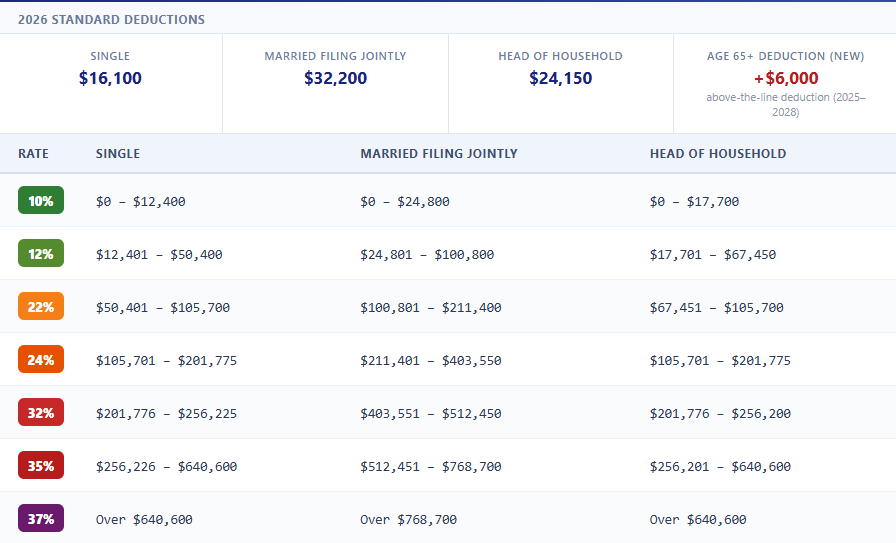
  1. Standard deduction. Under the One Big Beautiful Bill Act (signed July 4, 2025), the standard deduction was made permanent and further increased for 2026: $16,100 for single filers and married filing separately, $32,200 for married filing jointly, and $24,150 for heads of household.
  2. Additional deduction. Taxpayers who are over the age of 65 or blind receive an additional standard deduction of $2,050 if filing as single or head of household, or $1,650 per qualifying person if married filing jointly or married filing separately.
  3. Cash contributions to charity. The special $300/$600 deduction for non-itemizer cash charitable contributions expired after 2021. However, the One Big Beautiful Bill Act created a new above-the-line charitable deduction for non-itemizers starting in 2026: up to $1,000 for single filers and $2,000 for married couples filing jointly. The OBBBA non-itemizer charitable deduction is limited to cash gifts to public charities. Contributions to donor-advised funds, supporting organizations, and private non-operating foundations do not qualify.
happy grandfather and child have fun and play in park


Child Tax Credit Updates for 2026

Many clients interested in reducing their tax burdens are excited to learn about the Child Tax Credit. Although it only applies to individuals with children under the age of 18, it can be relevant to those who are approaching retirement if they have minor children, or if their children have children!

Here are the updates to keep track of for 2026:

  1. Maximum credit per qualifying child:  Maximum credit per qualifying child: $2,200 per qualifying child under the age of 17.
  2. Child Tax Credit eligibility. As a parent or guardian, you are eligible for the Child Tax Credit if your adjusted gross income is less than $200,000, or $400,000 if married filing jointly.
  3. Partial refundability. If your Child Tax Credit is greater than your tax, you can receive up to $1,700 as a cash refund.

Remote workers employed by ExxonMobil might face double taxation on state taxes. Here's what you need to know.

The One Big Beautiful Bill Act also created a new $6,000 above-the-line deduction for taxpayers age 65 and older (available 2025 through 2028), which reduces taxable income and may lower the portion of Social Security benefits subject to federal income tax for many retirees.

Thanks to the advent of remote work during and after the COVID-19 pandemic, many employees moved away from core cities. Notably, these moves may have taken them outside the state where they were employed. Some states established temporary relief provisions to avoid double taxation of income, but many of those provisions may have expired. There are only six states that currently have a "special convenience of employer" rule: Connecticut, Delaware, Nebraska, New Jersey, New York, and Pennsylvania. If you work remotely for ExxonMobil, and you don't currently reside in those states, consult with your tax advisor to determine if there are other ways to mitigate the risk of double taxation.


How ExxonMobil employees can optimize their retirement contributions

Contributing to your company's 401k plan can cut this year's tax bill significantly. With the right planning, these benefits can compound over time. In 2026, the amount you can save increased:

  1. 2026 limit. Individuals can contribute $24,500 to their 401k plans in 2026.
  2. Catch-up contributions. Employees age 50 and over can contribute an extra $8,000, bringing their total limit to $32,500. Those who are 60 - 63 years old during calendar year 2026 have a catch up contribution of $11,250, for a combined total of $35,750.
  3. A major opportunity. Lowering your taxable income by up to $35,750 means less of your money is immediately taxed. As the table here shows, this could save thousands on your current tax bill.

Many investors choose to invest the money they save in taxes. This bonus nest egg then has the opportunity to grow in the market, which can help pay the deferred tax when you take withdrawals from your accounts later in life.

 

tax bracket


Accounting for inflation in your retirement plan

XOM-HTML-Inflation


Following the searing rates of inflation Americans experienced in the early 2020s, the slighltly elevated rate of 3.3% for Q1 2026 seems much more palatable (Source: Bureau of Labor Statistics). Still, inflation remains a volatile source of risk to your portfolio, especially for investors in their 50s or 60s. Whether you like it or not, inflation will reduce the purchasing power of your dollars over time.

The Federal Reserve strives to achieve a 2% inflation rate each year, but the 8.3% inflation rate of 2022 reminded us all that this target is anything but a guarantee. To maintain your standard of living throughout your retirement after leaving ExxonMobil, you will have to factor rising costs into your plan. This is doubly important for costs like health care and housing, which have been known to outpace the total inflation rate, sometimes significantly.

An experienced advisor can help you prepare your portfolio for inflation, while taking into account the rest of your comprehensive plan. Speak with a financial advisor today to start planning for the impacts.

Schedule a Call

*Source: IRS.gov, Yahoo, Bankrate, Forbes

Blogs You May Enjoy:

New call-to-action

New call-to-action

New call-to-action

additional-articles-trg-1
Four serious engineers looking at plans sitting at a table at work-Nov-05-2024-01-14-45-7729-AM

Planning for your Retirement from ExxonMobil

Retirement planning is a verb, a consistent action that must be taken whether you’re 30 or 60.

The truth is that most Americans don’t know how much to save or the amount of income they’ll need.

No matter where you stand in the planning process, or your current age, we designed this guide to provide you with a comprehensive overview of the steps to take toward retirement. With the right resources, you can simplify and streamline your transition from ExxonMobil into retirement and get the most out of your benefits.

You know you need to save and invest, because "time in the market" beats "timing the market". But even if you've been investing for years, the game changes entirely once you switch from saving to spending.

That's where The Retirement Group comes in. We've partnered with Wealth Enhancement to offer a wide range of retirement planning resources. With a qualified, competent, and caring advising team by your side, ExxonMobil employees in the United States can make the most of what they've saved, and better plan for what they still need.

Don't leave your retirement transition to chance. Whether you're focused on optimizing the potential of your benefits, planning for rising health care costs, or creating effective tax diversification in your portfolio, The Retirement Group can help.

"A study by Russell Investments, a large money management firm,  found that good financial advisor can increase investor returns by 3.75 percent."


Schedule a Call

According to Bridging the Gap Between 401k Sponsors and Participants by T.Rowe Price, employees can realize a 79% potential boost in wealth at age 65 over a 20-year period when choosing to invest in their company's retirement plan.

*Source: Reference Point 2025, T. Rowe Price, April 2025


As decades go by, you’re likely full swing into your career at ExxonMobil, and your income probably reflects that. However, the challenges of saving for retirement often come from large competing expenses: a mortgage, raising children, and saving for their education.

One of the classic planning conflicts is saving for retirement versus saving for college. Most financial planners will tell you that retiring in your 60s from your company should be your top priority because your child can usually find support from financial aid, while you may need to fund more of your retirement yourself.

Source: Is it Worth the Money to Hire a Financial Advisor? The Balance, 2021

The benefits of investing in your 401k

Starting to save as early as possible matters. Time on your side means compounding can have significant impacts on your future savings. Once you’ve started, continuing to increase and maximize your contributions for your 401k plan is key.
ATTV5 Graph page8

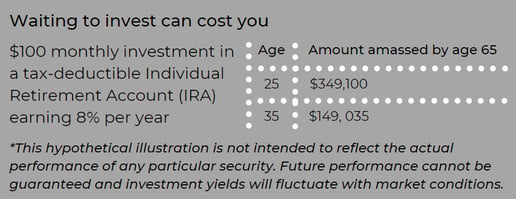
Waiting to invest in your 401k can cost you. This hypothetical illustration shows the potential risks of waiting just 10 years to start investing in an individual retirement account (IRA). Assuming a $100 monthly investment and an annual return of 8%, an investor who starts at age 25 instead of age 35 would have an extra $200,000 in their account when they reach age 65. This example certainly underscores the importance of starting early, but it also illustrates the importance of repeated, continuous investment. $100 a month might not seem like a lot to start, but by sticking with it, both of the investors in our example amassed a significant retirement nest egg.

While the amount you invest towards your retirement depends on your unique financial situation and goals, a good rule of thumb is to consider investing at least 10% of your salary toward retirement through your 30s and 40s. As much as your individual circumstances allow, it should be a goal to maximize your contributions.

The impact of catch-up contributions

As you enter your 50s and 60s, you’re ideally at peak earning years, with some of your major expenses behind you, such as a mortgage or child-rearing. Living in your state, this can be a good time to consider whether you have the ability to boost your retirement savings goal to 20% or more of your income. For many people in their 50s or 60s, this could potentially be the last opportunity to stash away funds.

 In 2026, workers can invest up to $24,500 into their 401k. Anyone age 50 or older can add an additional $8,000 in catch-up contributions, for a combined total of $32,500. Plus, anyone 60 to 63 during 2026 has a catch-up contribution of $11,250, for a combined total of $35,750. These limits are adjusted annually for inflation. 

Why are 401ks and matching contributions so popular?

Matching contributions are just what they sound like: Your company matches your own personal 401k contributions up to some point, using corporate funds. Typically, if your employer offers a match, they will match up to a certain percent of the amount that you invest.

For example, let's say ExxonMobil offers a 5% match to your 401k investments. If your salary is $100,000 and you invest $5,000 in your 401k, ExxonMobil would then match that amount, also investing $5,000 in your 401k, resulting in a $10,000 increase to your 401k balance. If you invested $10,000 instead, ExxonMobil would match $5,000 of that amount, bringing your total 401k investment for the year to $15,000.


401k employer match contributions are so popular because they are effectively "free money". If you don't invest enough to take full advantage of your employer's match, then you are leaving money on the table.

According to the Charles Schwab 2025 401(k) Participant Survey, 85% of workers consider a 401(k) a critical must-have benefit, essential to reaching their retirement goals.

Unfortunately, many people fail to take advantage of these programs.

According to Bank of America's "2023 Financial Life Benefits® Impact Report", despite 56% of eligible employees participating in a 401(k) plan, 66% of them contributed less than $5,000 for the year. The study also found that fewer than one in 10 participants’ contributions reached the ceiling on elective deferrals, under IRS Section 402(g), which is $24,500 for 2026.
 
According to Vanguard’s How America Saves 2025 report, employees who don’t maximize their employer’s 401(k) match leave significant retirement savings on the table each year. That amount could make a real difference to your retirement portfolio.

Interested in making the most of your 401k strategy at ExxonMobil? The best time to start is today. Click this button to schedule an introductory meeting with one of our ExxonMobil-focused advisors.


 

Schedule a Call

The ExxonMobil Pension Plan, Explained

XOM-HTML-Your-Pension-Plan
Whether you’re changing jobs or retiring from ExxonMobil, knowing what to do with your hard-earned retirement savings can be difficult. A company-sponsored plan, such as a pension and/or 401k, may make up the majority of your retirement savings, but how much do you really know about that plan and how it works?
 
There are early-out offers, interest rate impacts, age penalties, and complex tax implications, not to mention the seemingly endless rules that vary from one pension option to the next.
 
Increasing your investment balance and reducing taxes is the key to a successful retirement strategy. At The Retirement Group, we can help you understand how ExxonMobil's Pension Plan fits into your overall financial picture and how to make that plan work for you.
 
ExxonMobil employees in your state who are in their 50s or 60s may realize tangible benefits by properly understanding their pension plan. In this section, we'll give you the tools to do just that.
 
"Getting help and leveraging the financial planning tools and resources your company
makes available can help you understand whether you are on track, or need to
make adjustments to meet your long-term retirement goals..."
 
Source: Schwab 401k Survey Finds Savings Goals and Stress Levels on the Rise

What the ExxonMobil "Performance Improvement Plan" (PIP) means for you

ExxonMobil has been issuing PIPs to employees for some time. A PIP is essentially a severance offer to leave the company, with an option to enroll in an improvement program and potentially keep your job. When an employee receives a PIP, it means they fell into ExxonMobil’s “Needs Significant Improvement” (NSI) performance evaluation category. ExxonMobil has raised the number of employees who fall into the NSI category from 3% to as high as 10% of salaried U.S. workers. For employees in their 50s and 60s, understanding these shifts in policy is crucial for planning your future with the company.

 

Schedule a Call


 Information for XTO Employees

The XTO and ExxonMobil benefits plans were harmonized after the 2010 merger. However, there are a variety of exceptions that XTO employees need to be aware of. Your service as an XTO employee prior to ExxonMobil is used for purposes of qualifying for certain benefits, like retiree status, vesting, and the lump sum option for the pension. That said, years of service prior to ExxonMobil will not be counted in your pension formula for purposes of calculating your pension payout. Understanding this can help you choose the right time to leave the company to optimize your benefits, as well as the right time to commence your pension benefit.

In addition, the interest rates used to calculate your lump sum pension benefit are based on corporate bond rates instead of the lower, more favorable treasury bond rates that grandfathered ExxonMobil employees can use. This often produces a lower lump sum benefit, so it is even more critical to pay attention to the rates and the timing of your elections. Neglecting to do so can leave money on the table (see section below on pension interest rates for “Non-Grandfathered Employees”). The Retirement Group XTO-focused advisors can guide you through the retirement decision-making process and help you with your retirement paperwork to help you take full advantage of your retirement benefits and mitigate your risk of making any mistakes. 

12-Dec-12-2024-10-16-30-2169-PM


Will ExxonMobil Freeze its Pension?

ExxonMobil has previously suspended benefits, which raises the question, could they ever freeze the pension program? What would it look like if they did? A pension freeze means that employees can't accrue any additional future benefits. They would, however, be able to collect the benefits they have already earned.

Over the past several decades, many corporations have moved to defined contribution (DC) plans and moved away from defined benefit (DB) plans. Companies freeze or off-load DB pension plans to cut down on their pension obligations. By making the switch from a DB plan to a DC plan, corporations can also shift risk from the company to the workers. The trend is good for investors because companies who relieve themselves of pension debt become less risky investments. However, this trend can negatively impact employees who rely on those DB plans for their retirement years.

Understanding how your pension works is crucial, whether or not you're worried about a pension freeze. Next, we'll dive into the details.

ExxonMobil Pension Formula

The ExxonMobil Pension Plan is a defined benefit (DB) pension, based on:

  1. Years of Service (YOS)
  2. Final Average Pay (FAP)
  3. A Social Security (SS) offset
  4. Potential Age Penalties (AP)

The basic DB pension formula:  1.6% * YOS * FAP - SS offset

Five-year vesting rule, or age 65: You must work for ExxonMobil for at least five years, or reach age 65, to qualify for the pension.
Final Average Pay is your highest 36 consecutive months of pay within the last 10 years.
Age penalties may apply if you retire early, depending on your age and years of service.

Normal Retirement Age

You can retire without Age Penalties to your pension:

  1. At age 60 as a retiree
  2. At age 65 as a terminee

If you retire early (before age 60):

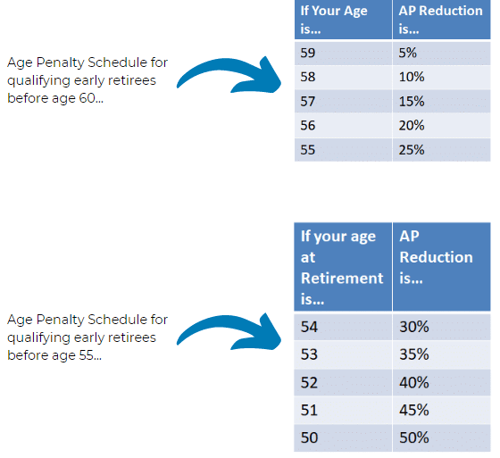
  1. At age 55 with 15 years of service, you can retire, but your pension will be reduced by 5% per year for each year you're under 60. Qualifying retirees before the age of 55 face the same penalty.
  2. Disability retirement. The earliest you can take your pension is age 50 if on disability.


Age Penalty Reductions

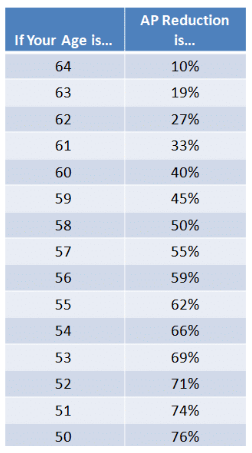
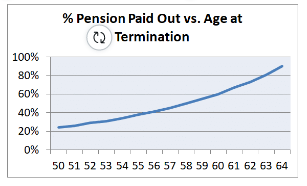
If you are a pre-65 terminee, you stand to face severe age penalties for each year before 65.
Pension Distribution Options

  1. Lump Sum. You take the entire value of your pension as a one-time payment.
  2. Annuity Options.
    1. Single Life Annuity (SLA). Payments for your lifetime only.
    2. Joint & Survivor Annuity (J&S). Payments continue for your lifetime, and a portion (often 50%, 75%, or 100%) goes to a designated survivor after your death.
    3. Period Certain (10/15/20 years). Payments are guaranteed for a specific number of years.
  3. Partial Lump Sum with Partial Annuity (75%, 50%, 25%). Split the payout into some combination of a lump sum and an annuity.

Important! If you are a "terminee" (a terminated employee who has not yet retired), only the Annuity Options will be available to you.


Pension Protection Act (PPA) Rate Transition

The PPA rate (prescribed by the Pension Protection Act of 2006) is transitioning in. High-quality corporate bond rates, and updated mortality assumptions as prescribed by the IRS, are being used.
Pension Death Benefit for Active Employees

What happens to your pension if you pass away while actively employed depends on your years of service.

Less than 15 years of service: Surviving Spouse Annuity

  1. The Pension Plan pays your surviving spouse an annuity equal to 1/2 of your basic pension benefit earned up to the date of your death (equivalent to a 50% Joint & Survivor Annuity).
  2. Your spouse may commence their benefit at any time from age 50-65 (based on your age), and is subject to early commencement penalties for terminees.

15 Years of service or more: Death Benefit Pension

  1. Calculated as if you retired on your date of death and elected the lump sum option (subject to early commencement penalties, depending on age at death).
  2. Payable to beneficiary designated on "Special Beneficiary Designation Form" (found on HR intranet). Spousal consent required for non-spouse beneficiary and must be updated at age 35.
  3. Can be paid as a lump sum or basic life annuity using the beneficiary's life expectancy.
  4. Lump sum rollover subject to inherited IRA rules (see PPA 2006).

Serious Young Business Professionals Discussing Project Plans at the Table Inside the Office-Dec-03-2024-04-09-52-1747-AM


Lump-Sum vs. Annuity

ExxonMobil retirees in your state who are eligible for a pension are often given the choice to either receive pension payments for life or take a lump-sum dollar amount upfront for the “equivalent” value of the pension. The idea for those who choose a lump sum is that you could take the money, roll it over to an IRA, invest it, and generate your own cash flows that enable you to take systematic withdrawals following your retirement from ExxonMobil.

On the plus side, a lump sum payment gives you complete flexibility over the funds, potentially allowing you to generate a greater retirement cash flow than you would receive with an annuity. Additionally, if something happens to you, any unused account balance will be available to a surviving spouse or heirs. However, if you fail to invest the funds for sufficient growth, there's a danger that the money could run out during your lifetime, and you may regret not having held onto the pension's "income for life" guarantee.

For its part, a pension annuity provides you with a steady stream of income throughout your lifetime, as long as the pension plan itself remains solvent and doesn’t default. So whether you live 10, 20, or 30 (or more!) years after leaving ExxonMobil, you don’t have to worry about the risk of outliving your money.

Annuity-Product-1024x546-removebg-preview-1

However, taking an annuity also comes with some drawbacks. Once you annuitize your pension, you can no longer access the lump sum. Additionally, unlike Social Security benefits, not all company pensions contain a cost of living allowance (COLA). That means the dollar amount of your monthly pension will remain the same throughout your retirement, losing its purchasing power in the face of inflation.

Ultimately, your decision will depend on what kind of return must be generated on that lump sum to replicate the payments of the annuity. After all, if a return of only 1% to 2% on your lump sum can create the same lifetime cash flows you'd see with an annuity, you're at less risk of outliving the lump sum after leaving ExxonMobil, even if you withdraw from it for life. However, if the annuity payments can only be matched by earning a much higher and possibly riskier rate of return, there is a greater risk those returns won’t manifest and you could run out of money.


Interest Rates and Life Expectancy

Current interest rates, as well as your life expectancy at retirement, have a large impact on lump sum payouts from the ExxonMobil pension plan. The Blended Interest Rates is staying steady for retirees who started receiving their ExxonMobil Pension payments in Q4 of 2025 through Q1 2026, Rising rates hurt your lump sum value. The reverse is also true. Decreasing or lower interest rates will increase lump sum values.

Interest rates are important for determining your lump sum option within the pension plan. However, they have no impact on the annuity options. The Retirement Group believes all ExxonMobil employees in the United States should run a detailed RetireKit Cash Flow Analysis comparing their lump sum value to their monthly annuity distribution options, before making a pension election. As enticing as a high lump sum may be, taking an annuity for all or part of your pension may be the better option, especially in a higher interest rate environment. Every person’s situation is different, and a Cash Flow Analysis will show you how your pension choices may play out over the course of 30 years or more.


Grandfathered ExxonMobil Employees
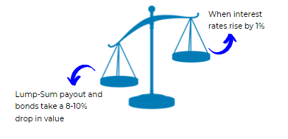
image-png-Nov-04-2021-05-38-59-09-PM-1

For grandfathered employees, the Q4 of 2025 and Q1 2026 pension rates are 4.00%  For non-grandfathered employees, the second and third quarter blended segments also decreased. If these rates continue to fall, lump sum payments may rise in value, but there are no guarantees that rates will decline further in the current interest rate environment.

interest-rate-system-vector-45263039-removebg-previewAs we continue to monitor the interest rate environment, we will gain more clarity on how rates are moving. If rates continue to trend lower, lump sum values will increase. However, if rates go higher, lump sums will decline. If you need help determining whether or not you are grandfathered, let us know. Feel free to reach out to The Retirement Group to receive help calculating and assessing your pension options, whether it be the annuity or lump sum. We provide a complimentary Retirement Cash Flow analysis or an update to an existing one.

By knowing where you stand in your 50s and 60s, you can make a more prudent decision when determining whether to retire soon, work longer, or delay the commencement of your pension benefit. For instance, working longer will generate more earned income, but this may be offset by a reduction in a future lump sum benefit, which could translate into working for less money.

The ExxonMobil 401k Plan

13-Dec-12-2024-10-16-16-5550-PM

ExxonMobil 401k Savings Plan

ExxonMobil employees in your state are encouraged to enroll in their 401k savings plan right away. You may invest on a before-tax or after-tax basis (regular or Roth) and choose from seven investment options, with varying degrees of risk and return. You can also roll over pre-tax and Roth amounts from other eligible plans.

Employer Contributions from ExxonMobil

If you contribute at least 6% of your pay to the Savings Plan, ExxonMobil will contribute a flat 7% of your pay alongside it. So if you contribute anywhere between 6% and 20% of your annual pay, your total savings will be between 13% and 27%.

Vesting
As a Savings Plan participant in the United States, you vest in the company match after three years of service, or at death. If you terminate employment with less than three years of service, you forfeit the company match, but keep the remainder.

In addition, if you have an account in a former employer's eligible plan, you may be eligible to roll over a distribution from that account to the Savings Plan.

When you retire, if you have balances in your 401k plan, you will receive a Participant Distribution Notice in the mail. This notice will show the current value you are eligible to receive from each plan and explain your distribution options. It will also tell you what you need to do to receive your final distribution. Please call The Retirement Group at (800) 900-5867 for more information, and we can get you in front of an advisor focused on clients in your state.

After Retirement:

  • Watch for your Participant Distribution Notice and Special Tax Notice regarding plan payments. These notices will help explain your options and what the federal tax implications may be for your vested account balance.
  • Review our most popular brochures for corporate employees: What has Worked in Investing & 8 Tenets when picking a Mutual Fund.
  • Download our e-book for more information on Rollover Strategies for 401(k)s.
  • Use the Online Beneficiary Designation to make updates to your beneficiary designations, if needed.
  • To learn about your distribution options, call The Retirement Group at (800) 900-5867.

Note: If you voluntarily terminate your employment from ExxonMobil, you may not be eligible to receive the annual contribution.

The benefits of working with a financial advisor for your 401k

When faced with a problem or challenge, many of us are programmed to try to figure it out on our own rather than ask for help. But with 401k investing, choosing to go it alone can significantly impact your outcomes, especially as you approach your 60s.

Over half of plan participants in the United States admit they don’t have the time, interest, or knowledge needed to manage their 401k portfolio. But the benefits of getting help go beyond convenience.

According to a study from Charles Schwab, the annual performance gap between those who get help and those who do not is 3.32% net of fees. This means a 45-year-old participant could see a 79% boost in wealth by age 65 simply by working with an advisor. That’s a big difference.

That's why it's important to consult with an advisor experienced with ExxonMobil's retirement benefits. If you're looking for guidance from an advisor who's been through it before, reach out to an advisor from The Retirement Group today. 

 

Schedule a Call

diversification-removebg-preview


Seeing Results

Getting help can be the key to better results across the 401k board.

A Charles Schwab study found several positive outcomes common to those using independent professional advice. They include:

  • Improved savings rates – 70% of participants who relied on 401k advice increased their contributions.
  • Increased diversification – Participants who managed their own portfolios invested in an average of just under four asset classes, while participants in advice-based portfolios invested in a minimum of eight asset classes.
  • Increased likelihood of staying the course – Getting advice increased the chances of participants staying true to their investment objectives, making them less reactive during volatile market conditions and more likely to remain in their original 401k investments during a downturn. Don’t try to do it alone.

Get help with your company's 401k plan investments. Your nest egg will thank you.

Strategies for leveraging your 401k before retirement

Did you know that there are ways you can tap into and leverage your 401k funds before retirement? Although these strategies may not apply to every situation, you may be able to use your 401k to bridge certain gaps in your financial plan.

Strategy #1. In-service withdrawals and 401k rollovers

An in-service withdrawal is when an employee takes money from their 401k while still employed. In-service withdrawals are a way to access money from your 401k early, and potentially roll it over into a different account type:

  1. Eligibility. In-service withdrawals are generally available to employees after they reach age 59 and a half, so they avoid the 10% early withdrawal penalty. However, some plans allow for earlier access to 401k funds under circumstances such as financial hardship.
  2. IRA rollover. These withdrawals are often used to roll over funds into an IRA or another retirement account while you're still employed. A direct rollover can avoid the 10% early withdrawal penalty, as well as any mandatory tax withholding. Rolling over your 401k into an IRA is a popular option for those looking for more control over their retirement savings. While your 401k might limit investment choices, IRAs often offer a broader range of investments.
  3. Tax implications. If your in-service withdrawal is not rolled over into an IRA, you may owe income tax on the amount withdrawn.

It’s important to know that certain withdrawals are subject to regular federal income tax and you may also be subject to an additional 10% penalty tax depending on your age.

You can determine if you’re eligible for a withdrawal, and request one, online or by calling the ExxonMobil Benefits Center in the United States. Your plan summary outlines more information and possible restrictions on rollovers and withdrawals.

You should also know that the plan administrator reserves the right to modify the rules regarding withdrawals at any time, and may further restrict or limit the availability of withdrawals for administrative or other reasons.  All plan participants will be advised of any such restrictions, which apply equally to all ExxonMobil employees.

startup business people group have meeting in modern bright office interior, senoir investors  and young software  developers-Nov-09-2024-08-39-10-0519-AM

Strategy #2. Borrowing from your 401k

If you need money quickly due to a job loss, serious health emergency, or other reason, borrowing from your 401k can be an option.

Banks will make you jump through many hoops for a personal loan, and credit cards charge too much interest... If these are the only options for much-needed cash, your 401k balance might start looking like a usable asset.

Unlike an in-service withdrawal, a loan must be paid back. However, they are not taxable (unless you fail to repay them). Yet, despite the potential benefits, taking a loan from your 401k may also come with some drawbacks:

  1. Borrowing from the future. First and foremost, you may be setting your retirement plan back by a some time if you take money from your future and use it today.
  2. Lost growth potential. Even though you'll repay the loan, those funds will miss out on potential growth through investments during the repayment period. This can create a gap in your portfolio, especially if the market performs well while your money is out of the account.
  3. Repayment issues. If you leave your employer or lose your job, you may be forced to pay the full loan within a short time frame. If you're unable to, the loan can be treated as an early withdrawal and be penalized and taxed as such.

Borrowing from your 401k should be considered a last resort. If you're concerned that you may need to take a loan from your 401k to make ends meet, reach out to an advisor at The Retirement Group today.

The Net Unrealized Appreciation (NUA) Strategy

When you qualify to withdraw funds from your 401k plan, you have three options:Pads with color diagrams and color shining on background-3

  • Roll over your qualified plan to an IRA and continue deferring taxes.
  • Take a distribution and pay ordinary income tax on the full amount.
  • Take advantage of NUA and reap the benefits of a more favorable tax structure on gains.


How does Net Unrealized Appreciation work?

First, you must be eligible for a distribution from your qualified company-sponsored plan, which typically happens at retirement age. Generally, you would take
a lump sum distribution from the plan, distributing all assets from the plan during a one-year period. The portion of the plan that is made up of mutual funds and other investments can be rolled into an IRA for further tax deferral. The highly appreciated company stock is then transferred to a non-retirement account.

The tax benefit comes when you transfer the company stock from a tax-deferred account to a taxable account. At this time, you apply NUA and you incur an ordinary income tax liability on only the cost basis of your stock. The appreciated value of the stock above its basis is not taxed at ordinary income tax rates but at long-term capital gains rates of 0%, 15%, or 20%, depending on your taxable income. The 3.8% Net Investment Income Tax under §1411 may also apply if your income is above $200,000 (single) or $250,000 (MFJ). This could mean a potential savings of over 30%.

Example: Net Unrealized Appreciation (NUA) Tax Savings
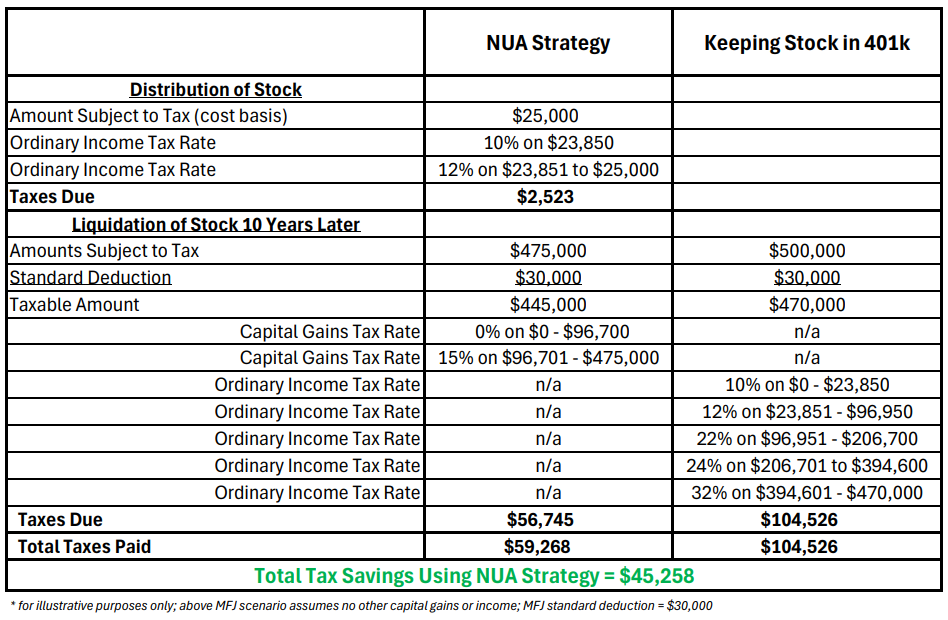
As an ExxonMobil employee residing in the United States, you may be interested in learning more about NUA. Reach out today to schedule a complimentary one-to-one session with a financial advisor from The Retirement Group.

IRA Withdrawal
IRA

Your retirement assets may be spread across several retirement accounts: IRAs, 401ks, taxable accounts, and others.

What is the most efficient way to take your retirement income after leaving ExxonMobil?

This question relates to something called withdrawal sequencing, and it's a problem we're well-equipped to handle at The Retirement Group.

You may want to consider meeting your income needs in retirement by first drawing down taxable accounts rather than tax-deferred accounts. This may help your retirement assets with your company last longer as they continue to potentially grow tax deferred.

You will also need to plan to take the required minimum distributions (RMDs) from any company-sponsored retirement plans and traditional or rollover IRA accounts when you reach age 73. Under SECURE 2.0, this age is 73 for those born between 1951 and 1959, and 75 for those born in 1960 or later. 


Two flexible distribution options for your IRA

When you need to draw on your IRA for income or to take your RMDs, you have a few choices. Regardless of what you choose, IRA distributions are subject to income taxes and may be subject to penalties and other conditions if you’re under 59½.

Option 1. Partial withdrawals: Withdraw any amount from your IRA at any time. If you’re 73 or over, you’ll have to take at least enough from one or more IRAs to meet your annual RMD.

Option 2. Systematic withdrawal plans: Structure regular, automatic withdrawals from your IRA by choosing the amount and frequency to meet your income needs after retiring from ExxonMobil. If you’re under 59½, you may be subject to a 10% early withdrawal penalty (unless your withdrawal plan meets Code Section 72(t) rules).

Your tax advisor can help you understand distribution options, determine RMD requirements, calculate RMDs, and set up a systematic withdrawal plan.


Health Care and Retirement Benefits at ExxonMobil

General-Mills-HTML-Your-Benefits


Doctor taking blood pressure of female patient at office


Using an HSA for retirement health care

Health care costs are increasing drastically. According to the Centers for Medicare & Medicaid Services, health care in 2025 accounted for over 17% of the United State's GDP, which amounted to $4.5 trillion.

This raises the question: How will you be paying for health care in retirement?


Health Savings Accounts (HSAs) are tax-advantaged accounts designed for individuals with high-deductible insurance plans. For 2026, the IRS defines high-deductible plans as those with a minimum deductible of $1,700 for individuals, or $3,400 for families.

HSAs are often celebrated for their utility in managing health care expenses in a tax-smart way, with three primary benefits:

  1. HSAs allow contributions to be made pre-tax.
  2. Investments within HSAs grow tax-free.
  3. Withdrawals are tax-free for qualified medical expenses.

Thanks to this triple tax advantage, HSAs are a potent retirement savings vehicle, especially after you've maxed out the employer match to your 401k in the United States.


HSA Contribution Limits & Retirement Strategy

In 2026, individuals can contribute $4,400 to an HSA, and families can contribute $8,750. Those aged 55 and older can contribute an additional $1,000.

When it comes to its place in your retirement toolbelt, HSAs really shine after you reach your employer's maximum match in 401k contributions. While 401ks offer tax-deductible contributions and tax-deferred growth, their withdrawals are taxable. HSAs bypass the withdrawal tax for qualified medical expenses, which are a significant (and increasing!) portion of retirement costs.

However, after age 65, the HSA flexes its muscles even more. After this age, funds can be withdrawn for any purpose, and subject to only regular income tax if used for non-medical expenses. This flexibility offers the benefits of traditional retirement accounts, but with the added advantage of tax-free withdrawals for qualified medical costs.

Further, HSAs do not have required minimum distributions (RMDs) like 401ks and traditional IRAs do, offering more control over tax planning in retirement. This makes HSAs particularly relevant for those who don't anticipate needing all of their funds right away in retirement, or who want to reduce their taxable income, perhaps as a part of a deferred compensation strategy.

HSA Investment Strategy Insights: Initially, conservative investment within an HSA is prudent. Early on, it's important to focus on maintaining sufficient liquid funds to cover near-term deductibles and out-of-pocket medical expenses. However, once you've established a solid financial cushion, treating an HSA like a retirement account by investing in a diversified mix of assets can significantly boost long-term opportunity and flexibility.


What can an HSA cover?

In retirement, HSAs can cover a range of expenses:

  1. Medical expenses. You can use HSA funds tax-free for qualified medical expenses, which include most doctor visits, prescriptions, and dental or vision care. 
  2. Medicare premiums. HSA funds can pay for Medicare Part B, Part D, and Medicare Advantage premiums.
  3. Long-term care. HSA funds can cover some amount of qualified long-term care insurance premiums or services.
  4. Non-medical expenses. After age 65, you can withdraw HSA funds for non-medical expenses without penalty, although these withdrawals will be taxed as regular income. 

HSAs are a powerful retirement tool, with unique advantages that can augment your ExxonMobil health care benefits. By making strategic contributions and considerate withdrawals, you can optimize your financial health in retirement, while also prioritizing your physical health.


Short-Term & Long-Term Disability Coverage

  1. Short-Term: Depending on your plan, you may have access to short-term disability (STD) benefits through ExxonMobil.
  2. Long-Term: Your plan's long-term disability (LTD) benefits are designed to provide you with income if you are absent from employment for six consecutive months or longer due to an eligible illness or injury.

TRG-HTML-Life-After-Career-2

ExxonMobil Life Insurance in Retirement

At ExxonMobil, if you have 10 years of service and are at least 50 years of age, you may be able to continue your employee-paid coverage into retirement. No action is required by you to maintain your coverage, but the cost of your coverage may increase. Check with ExxonMobil for more details. 

Generally, your contributions as a retiree will be higher than those you pay as an employee. After you retire, you can reduce the amount of supplementary coverage you have at any time. The change will take effect on the first of the following month. In some cases, you may be able to purchase additional supplementary coverage of one times pay (within 31 days of retirement) if your retiree basic life insurance is less than one times your active pay.

Important Note: If you stop paying supplementary contributions, your coverage will end. You will not be able to reinstate it. Please read the ExxonMobil SPD for more details.

What happens if your employment ends?

 
Your life insurance coverage, along with any optional coverage for your spouse, domestic partner, or children, ends on the date your employment ends, unless your employment ends due to a disability. If you pass away within 31 days after your termination date, benefits will be paid to your beneficiary for both your basic and any additional life insurance you elected.

Important notes on ExxonMobil life insurance:
 
  1. You may have the option to convert your ExxonMobil life insurance into an individual policy, or choose portability for any optional coverage.
  2. Coverage will end if you stop paying supplementary contributions.
  3. If you are over 65 and have supplemental life insurance, you should receive information in the mail from the insurance company outlining your options.
  4. Remember to update your beneficiaries. See the Summary Plan Description for more details.

ExxonMobil Beneficiary Designations

 
As part of your retirement planning and estate planning, it’s important to name someone to receive the proceeds of your benefit programs in the event of your death. That’s how ExxonMobil will know to whom to send your final compensation and benefits. This can include life insurance payouts as well as any pension or savings balances you may have.

Next Steps:
  • When you retire, make sure that you update your beneficiaries. ExxonMobil has an Online Beneficiary Designation form for life events such as death, marriage, divorce, childbirth, adoptions, etc.
  • If you are unsure about how to align your ExxonMobil beneficiary designations with your overall financial plan, schedule a call to speak with one of our ExxonMobil-focused advisors.


Social Security & Medicare Strategies

TRI-HTML-Social-Security-Medicare-1

Claiming Social Security is one thing, understanding how your claim works is something else entirely. Understanding Social Security is a difficult but crucial step in assessing your retirement paycheck. For many Americans, Social Security benefits are core to their retirement income strategy. However, when and why you claim them depends on your overall withdrawal strategy.

To help you make an informed decision, let's explore three main steps you should follow to solidify your Social Security strategy at ExxonMobil:

Step 1. Decide when to claim your Social Security benefits.

Social Security benefits can be significant, but at the end of the day, they're just one part of your overall financial picture. When considering the timing of your claim, keep this general principle in mind: The later you begin receiving benefits, the larger those benefits will be.

The full monthly Social Security retirement benefit is based on applying at the Full Retirement Age (FRA), which is age 67 for those born 1960 or later. For every year you wait after you reach the FRA, your benefit amount increases 8%. It reaches a maximum at age 70. If we do the math, we can determine that, if you start claiming at age 70, your monthly benefit will be 124% the full benefit.

However, you can also apply before you reach FRA, as early as age 62. You will receive a reduced benefit if you do so, but this option could make sense for those who want to start claiming their benefit earlier for longevity reasons.
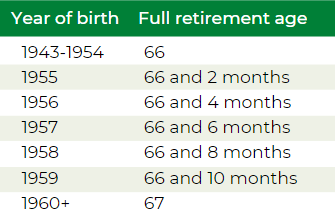
image-png-Nov-04-2021-06-08-27-51-PM

Step 2. Understand the tax implications.

For all but the lowest-income retirees, Social Security benefits are actually taxable. Only individuals with provisional income under $25,000, or $32,000 if married filing jointly, receive their benefits tax-free. Otherwise, up to 85% of your benefits will be treated as taxable income.

Furthermore, depending on where you live, your Social Security benefits may even be taxed at the state level. If you plan to move for retirement, the tax regime in the state you're moving to can be a relevant consideration.

Step 3. Start preparing today.

Even if your retirement is right around the corner, you can make decisions today that will impact you for years, or decades, to come. For instance, delaying your Social Security claiming date by even a year or two can snowball into a significant benefit. To bridge the gap between their retirement date and their claiming date, some people create a "slush fund" while they're working to take the place of the Social Security benefits they would receive from claiming at FRA. Whether these funds come from a 401k, IRA, or brokerage account, integrating a bit of extra padding in your planning can pay off in the long run.
Always remember, your Social Security benefit is just one part of your overall financial picture. And when you start to consider tax implications, withdrawal sequencing, and effective diversification (beyond just the asset class), the picture can start to get complicated. That's what we're here to help with. At The Retirement Group, we've been assisting ExxonMobil employees to and through retirement for years. If you're interested in speaking with an experienced advisor who's been through the process before, reach out today.

Schedule a Call


Elder woman reading a book at home and smiling-1

ExxonMobil Medicare Coverage for Retirees

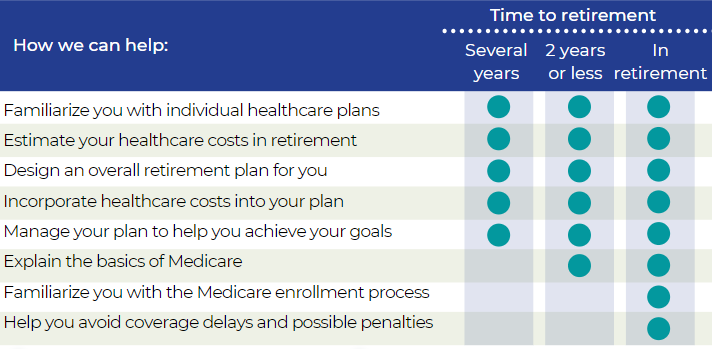
Are you eligible for Medicare or will be soon? If you or your dependents are eligible after you leave ExxonMobil, Medicare generally becomes the primary coverage for you or any of your dependents as soon as they are eligible for Medicare. This will affect your company-provided medical benefits.

It's your responsibility to enroll in Medicare Parts A and B when you first become eligible, and you must stay enrolled to have coverage for Medicare-eligible expenses. This applies to your Medicare-eligible dependents as well.
If you don’t enroll in Medicare Parts A and B, your provider can bill you for the amounts that are not paid by Medicare, which could make your out-of-pocket expenses significantly higher.
 

image-png-Nov-04-2021-06-10-31-71-PM

 
You should know how your retiree medical plan choices or Medicare eligibility impact your plan options. Before you retire, contact the U.S. Social Security Administration directly at 800-772-1213, call your local Social Security Office, or visit ssa.gov.


The Reality of Medical Costs in Retirement

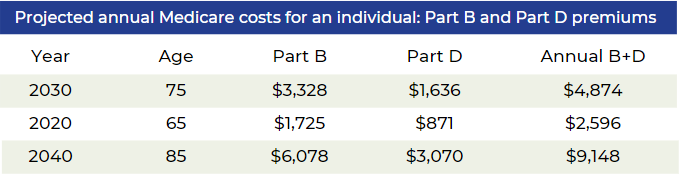
According to the Employee Benefit Research Institute (EBRI), Medicare will only cover about 60% of an individual’s medical expenses. This means a 65-year-old couple, with average prescription drug expenses for their age, will need $259,000 in savings to have a 90% chance of covering their health care expenses. A single male will need $124,000, and a single female, thanks to her longer life expectancy, will need $140,000.
 
Numbers like these aren't meant to scare you; rather, they're here to inform you about the realities of health care in retirement. A sound retirement income plan, coupled with comprehensive, holistic integration with your overall financial plan, can help you prepare for health care costs after you retire. If you have concerns about your ExxonMobil health care plan or want an experienced set of eyes to look over your options, don't hesitate to reach out


Dealing with Divorce

ATT-HTML-Divorce
 
28% of couples over retirement age will get divorced. Many of these couples will have saved together for decades, assuming that they would retire together. After a divorce, they face the expenses of a pre- or post-retirement life, but with access to half of the savings and assets they thought they'd have.
 
Divorce is an unfortunate reality in the United States. If you're divorced, or in the process of divorcing, you need to understand both your and your spouse's rights regarding retirement benefits. 
 

Divorce and Retirement Benefits Explained

Social Security Benefits. Divorce can significantly impact retirement benefits, including Social Security. Understanding how divorce affects Social Security is essential for retirement planning, especially if you were married for a long time. In some cases, divorced individuals may be eligible to claim benefits based on their former spouse's work record.

You can apply for a divorced spouse’s benefit if the following criteria are met:

  1. You’re at least 62 years of age.
  2. You were married for at least 10 years prior to the divorce.
  3. You are currently unmarried.
  4. Your ex-spouse is entitled to Social Security benefits.
  5. Your own Social Security benefit amount is less than your spousal benefit amount, which is equal to one-half of what your ex’s full benefit amount would be if claimed at Full Retirement Age (FRA).

Unlike a married couple, your ex-spouse doesn’t have to have filed for Social Security before you can apply for your divorced spouse’s benefit. However, this only applies if you’ve been divorced for at least two years, and your ex is at least 62 years of age. If the divorce was less than two years ago, your ex must already be receiving benefits before you can file as a divorced spouse.

COP-divorce-3


Social Security Survivor Benefits.

Many people are surprised that divorce doesn't disqualify you from receiving survivor benefits if your spouse dies. You can claim a divorced spouse's survivor benefit if the following conditions are met:

  1. Your ex-spouse is deceased.
  2. You are at least 60 years old.
  3. You were married for at least 10 years.
  4. You are single or you remarried after age 60.
If you meet these criteria, you can receive up to 100% of your deceased ex-spouse's Social Security benefits. However, claiming before FRA can reduce that benefit amount.

If you qualify for survivor benefits and your own Social Security benefits, you can choose to start with survivor benefits and switch to your own later, or vice versa, depending on which option gives you the highest payout over time. If this pertains to you, we recommend speaking to a qualified financial advisor, because planning your Social Security strategy in advance is critical to optimizing your outcomes.


Divorce and ExxonMobil Pension Benefits

If you're divorcing, be sure to provide ExxonMobil with any requested documentation to avoid having your pension benefit delayed or suspended. You’ll need to submit this documentation to your company’s online pension center regardless of how long ago you divorced or how short the marriage was.
 
To learn more about how divorce might affect your company's retirement benefits, give us a call. 
 

In the process of divorcing?

If your divorce isn’t final before your retirement date from your company, you’re still considered married. You have two options:

  • Retire from ExxonMobil before your divorce is final and elect a joint pension of at least 50% with your spouse, or get your spouse’s signed, notarized consent to a different election or lump sum.
  • Delay your retirement from your company until after your divorce is final and you can provide the required divorce documentation.

 
 
Sources: The Retirement Group, “Retirement Plans - Benefits and Savings,” U.S. Department of Labor, 2024; “Divorced: See how to claim your Social Security benefit," Fidelity, 2025
 

Survivor Checklist for ExxonMobil Employees

COP-survivor-checklist-1


If you pass away before collecting your retirement benefits, your surviving loved ones must be prepared to take action. It will be their responsibility to collect their survivor benefits. By following the tips in these three sections, you can prepare your loved ones to make the most of the benefits they're entitled to:


In the event of your death...

If you die, there are two specific actions that your survivor needs to take promptly:

  1. Report your death. Your spouse, a family member, or even a friend should call ExxonMobil's benefits service center as soon as possible to report your death.
  2. Collect life insurance benefits. Your named beneficiary, be it your spouse or someone else, will need to call ExxonMobil's benefits service to collect their entitled life insurance benefits.


If you have a joint pension...

If you have have a joint pension through ExxonMobil, your joint pensioner must start receiving payments following your death.

  1. Understand the joint pension details. Note that the joint pension is not automatic. Your joint pensioner will need to complete and return the paperwork from ExxonMobil's pension center to start receiving payments.
  2. Be prepared to cover the gap. Your joint pensioner will need to have enough savings to bridge at least one month between the end of your regular pension payments and the beginning of the joint pension payments. For someone in their 50s or 60s, this is especially important.


If your survivor has ExxonMobil medical coverage...

If your survivor relies on ExxonMobil for medical coverage, they must now decide whether to keep that coverage.

If they are enrolled as a dependent in the ExxonMobil-sponsored retiree medical coverage when you die, they need to decide whether to keep it. Note that survivors in your state may be required to pay the full monthly premium.

Life After Your Career at ExxonMobil

happy young romantic couple in love have fun on beautiful beach at beautiful summer day


In decades past, our parents and grandparents often considered retirement the end of their working lives. After all, why else would you call it retirement?

However, more recently, there has been a growing trend towards working in retirement. In many situations, working in retirement can provide a variety of benefits.

Financial benefits of working in retirement

If you started saving late, or lost some of your investments in market downturns, working in retirement may help you fill in the gaps.

Maybe you took a great offer at another company, but left earlier than you wanted, and with less retirement savings than you needed. Instead of drawing down your savings early in retirement, you can work a little longer to make up the difference.

Working in retirement can also help you meet your day-to-day financial requirements. Expenses in retirement can actually unexpectedly increase, and the cost of living in the United States continues to rise. By working in retirement, you may be able to keep these expenses down, especially if your employer offers benefits like health care coverage.

Emotional benefits of working in retirement

While the financial benefits are real, retaining employment or exploring new opportunities can provide emotional benefits in retirement. It can help you stay active and involved, while giving you the chance to use the skills you've worked so hard to develop throughout your career.

Of course, many of us also just enjoy working. Providing value to others through work is a core part of being a human. Just because the Social Security Administration set a retirement age doesn't mean you have to listen!


ExxonMobil employees interested in planning their retirement may benefit from live webinars hosted by experienced financial advisors. Click here to register for our upcoming webinars for ExxonMobil employees. 


Sources

Sources (graphic)6