

<img height="1" width="1" style="display:none" src="https://www.facebook.com/tr?id=314834185700910&amp;ev=PageView&amp;noscript=1">

Retirement Guide for Verizon Employees


In this comprehensive retirement guide for Verizon employees in your city, your state, we  cover the most critical factors  to take into account when deciding on the proper time to retire from Verizon.

From tax rates to health care, inflation, and benefit changes, this guide is designed to answer your most pressing retirement questions.

While we are not affiliated with Verizon, The Retirement Group has extensive experience working with Verizon employees as they move toward and into retirement. For more information, we recommend reaching out to your  Verizon benefits department.

Table of Contents

2025 Tax Changes & Inflation

BOE-HTML-Inflation

People in your city, your state need to be aware of changes made by both Verizon and the IRS. Here are some important updates for 2026:

2026 Tax Code Changes 

  1. Standard deduction.  In 2026, the standard deduction increased to $16,150 for single filers and married filing separately, $32,300 for joint filers, and $24,200 for heads of household.
  2. Additional deduction. Taxpayers who are over the age of 65 or blind can add an additional $1,650 to their standard deduction. This amount jumps to $2,050 if they are also unmarried or not a surviving spouse.
  3. Cash contributions to charity. The special deduction that allowed non-itemizers to deduct up to $300 in cash donations to charity - or $600 for those married filing jointly - has expired.

Child Tax Credit Updates for 2026

Many of our clients who are interested in reducing their tax burdens as much as possible are excited to learn about the Child Tax Credit. Although it only applies to individuals with children under the age of 18, it can be relevant to those who are approaching retirement if they have minor children - or if their children have children!

Here are the 2026 updates:

  1. Maximum credit per qualifying child: $2,000 per qualifying child under age 17.
  2. Child Tax Credit eligibility. As a parent or guardian, you are eligible for the Child Tax Credit if your adjusted gross income is less than $200,000, or $400,000 if married filing jointly.
  3. Partial refundability. If your Child Tax Credit is greater than your tax, you can receive up to $1,700 as a cash refund.

Optimize your retirement contributions

Contributing to Verizon's 401(k) plan can cut this year's tax bill significantly. With the right planning, these benefits can be compounded over time. In 2026, the amount you can save increased:

  1. 2026 limit. Individuals can contribute $24,500 to their 401(k) plans in 2026.
  2. Catch-up contributions. Employees age 50 and over can contribute an extra $8,000, bringing their total limit to $32,500. For those who turn 60-63 years of age during calendar year 2026, their catch-up contribution is $11,250, for a combined total of $35,750.
  3. A major opportunity. Lowering your taxable income by up to $35,750 means less of your money is immediately taxed. As shown in the table below, this could save you thousands on your current tax bill.

Many investors choose to invest the money they save in taxes for the year. This bonus nest egg then has the opportunity to grow in the market, which can help pay the deferred tax when they make withdrawals from their accounts later in life.

2026 Federal Income Tax Brackets

Rate Single Married Filing Jointly Married Filing Separately Head of Household
10% $0 - $12,400 $0 - $24,800 $0 - $12,400 $0 - $17,700
12% $12,401 - $50,400 $24,801 - $100,800 $12,401 - $50,400 $17,701 - $67,450
22% $50,401 - $105,700 $100,801 - $211,400 $50,401 - $105,700 $67,451 - $105,700
24% $105,701 - $201,775 $211,401 - $403,550 $105,701 - $201,775 $105,701 - $201,750
32% $201,776 - $256,225 $403,551 - $512,450 $201,776 - $256,225 $201,751 - $256,200
35% $256,226 - $640,600 $512,451 - $768,700 $256,226 - $384,350 $256,201 - $640,600
37% $640,601+ $768,701+ $384,351+ $640,601+

Source: IRS IR-2025-103 / Revenue Procedure 2025-32.


Dealing with Inflation

Inflation - we're all too familiar with it. Inflation degrades purchasing power over time, meaning the same things cost more year after year. While inflation is difficult to deal with as a working adult, managing it becomes harder in retirement.

To maintain the same standard of living in retirement, you need to factor rising costs into your plan. While the Federal Reserve targets 2% inflation each year, the scorching inflation of the early 2020s reminded us that Fed targets are anything but a guarantee.

When nearing retirement, it's important to keep track of the rate of inflation, especially in specific areas like health care. While prices as a whole have risen dramatically, increases in particular categories can outpace inflation, which can lead to unpleasant surprises down the road if you're not prepared. Speak with a qualified financial advisor when constructing your holistic plan to help plan for the impacts of future inflation.

*Source: IRS.gov, Yahoo, Bankrate, Forbes

Schedule An Appointment with a Retirement Group Advisor


Please choose a date that works for you from the available dates highlighted on the calendar.

Recent Layoff Announcements & Other Verizon News

Blogs You May Enjoy:


New call-to-action

New call-to-action

New call-to-action

additional-articles-trg-1

Planning Your Retirement

XOM-HTML-Planning-Your-Retirement

Retirement planning is a verb; consistent action must be taken whether you’re 20 or 60.

The truth is that most Americans don’t know how much to save or the amount of income they’ll need.

No matter where you stand in the planning process, or your current age, we designed this guide to provide you with a solid overview of the steps you can take toward retirement. With the right resources, you  can simplify and streamline your transition from Verizon into retirement and get the most from your benefits in your city, your state.

You know you need to be saving and investing, especially since time is on your side the sooner you start. But even if you've been investing for years, the game changes entirely once you switch from saving to spending.

That's where The Retirement Group comes in. We've partnered with Wealth Enhancement to offer a wide range of retirement planning resources. With a qualified, competent, and caring advising team by your side, Verizon employees in the United States can make the most of what they've saved, and better plan for what they still need.

"A study by Russell Investments, a large money management firm, found that good financial advisor can increase investor returns by an estimated 3.75%."

Source: Is it Worth the Money to Hire a Financial Advisor? The Balance.

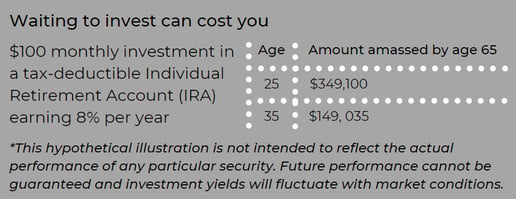
Starting to save as early as possible matters. Time on your side means compounding can have significant impacts on your future savings. And, once you’ve started, continuing to increase and maximize your contributions for your 401k plan is key.
ATTV5 Graph page8

There's a 79% potential boost in wealth at age 65 over a 20-year period when choosing to invest in your company's retirement plan.

*Source: Bridging the Gap Between 401k Sponsors and Participants, T.Rowe Price.

As decades go by, you’re likely full swing into your career at in your city, your state and your income probably reflects that. However, the challenges of saving for retirement start coming from large competing expenses: a mortgage, raising children, and saving for their college.

One of the classic planning conflicts is saving for retirement versus saving for college. Most financial planners will tell you that retirement from should be your top priority because your child can usually find support from financial aid while you’ll be on your own to fund your retirement.

The recommended amount that you should invest towards your retirement always  depends on your unique financial situation and goals. However, a good rule of thumb is to consider investing at least 10% of your salary toward retirement throughout your 30s and 40s.

As you enter your 50s and 60s, you’re ideally at your peak earning years with some of your major expenses, such as a mortgage or child-rearing, behind you or soon to be in the rearview mirror. This can be a good time to consider whether you have the ability to boost your retirement savings goal to 20% or more of your income. For many people, this could potentially be the last opportunity to stash away funds.

Why are 401ks and matching contributions so popular?

401ks are powerful retirement savings vehicles that give you the chance to take advantage of three main benefits:

  • Compound growth opportunities (as seen above)
  • Tax saving opportunities
  • Matching contributions


Matching contributions are just what they sound like: your company matches your own 401k contributions, up to a specified amount or percentage, using corporate funds. 

For example, let's say Verizon offers you a 6% match to your 401k investments. If your salary is $100,000 and you invest $6,000 in your 401k, Verizon would then match that amount, also investing $6,000 in your 401k—resulting in a $12,000 increase to your 401k balance. If you invested $10,000 instead, Verizon would match $6,000 of that amount, bringing your total 401k investment to $16,000 for that year.

Unfortunately, many people fail to take advantage of their company's matching contributions because they’re not contributing the required minimum to receive the full company match. 
 
Research published by Principal Financial Group found that 62% of workers deemed company 401(k) matches very important to reaching their retirement goals. However, according to Bank of America's "Financial Life Benefit Impact Report", despite 58% of eligible employees participating in a 401(k) plan, 61% contributed less than $5,000 during the year. The study also found that fewer than 1 in 10 participants' contributions reached the ceiling on elective deferrals under IRS Section 402(g), which is $24,500 for 2026.


A  study titled “Missing Out: How Much Employer 401k Matching Contributions Do Employees Leave on the Table?”, revealed that employees who don’t maximize their company match typically leaves $1,336 of extra retirement money on the table each year.

If you want to make the most of the opportunities that Verizon offers you before you retire, reach out today and schedule a call with The Retirement Group.


Schedule a Call

Your Pension Plan

Xcel-Energy-HTML-Your-Pension-Plan
Whether you’re changing jobs or retiring from Verizon in your city, your state, knowing what to do with your hard-earned retirement savings can be difficult. A company-sponsored plan, such as a pension, may make up the majority of your retirement savings, but how much do you really know about that plan and how it works?
 
There are seemingly endless rules that vary from one retirement plan to the next, early out offers, interest rate impacts, age penalties, and complex tax impacts.
 
Increasing your investment balance and reducing taxes is the key to a successful retirement plan spending strategy. At The Retirement Group, we can help you understand how your company's pension plan fits into your overall financial picture and how to make that plan work for you.
 
"Getting help and leveraging the financial planning tools and resources your company
makes available can help you understand whether you are on track, or need to
make adjustments to meet your long-term retirement goals..."
 
Source: Schwab 401(k) Survey Finds Savings Goals and Stress Levels on the Rise

Verizon Cash Balance Pension

The Verizon Cash Balance Pension Plan is a type of defined benefit plan where the benefits are defined in terms of a hypothetical account balance. 

The Verizon Management Pension Plan is available for managers and associates who have become fully vested employees as of October 28, 2012.

For Associates: You must accrue 15 years of service and at least 76 Points (years of age + years of service) - age penalties (3% per year until age 55).

For Managers: You must accrue 75 points (years of age + years of service) - age penalties (3% per year until age 55). If you have accrued at least 30 years of service, then NO age penalties will apply, and you will receive your full benefit unadjusted for early retirement.

Unlike traditional pension plans that base benefits on a final average pay formula, a cash balance plan credits a participant's account with a certain percentage of their pay each year, plus interest credits.

How the Verizon Cash Balance Pension Plan Works:

Account Credits:

● Pay Credits: Each year, Verizon credits the employee's cash balance account with a percentage of their eligible compensation. The percentage is typically based on the employee's age or years of service, or a combination of both. Example Pay Credit Structure:

○ Under 30 years of service: 4% of eligible compensation

○ 30-40 years of service: 5% of eligible compensation

○ Over 40 years of service: 6% of eligible compensation

● Interest Credits: In addition to pay credits, the plan adds interest to the account balance each year. The interest rate is typically tied to a specified index, such as the 30-year Treasury bond rate, and may vary from year to year.

Example Interest Credit:

○ If the interest credit rate for a given year is 4%, then the employee's account balance would grow by 4% due to interest in that year.

Age Penalties:

For Managers: You must accrue 75 points (years of age + years of service) - age penalties (3% per year until age 55. If you have accrued at least 30 years of service, then NO age penalties will apply, and you will receive your full benefit unadjusted for early retirement.

For Associates: You must accrue 15 years of service and at least 76 Points (years of age + years of service) - age penalties (3% per year until age 55).

The Associate formula for calculating your annual benefit is as follows:

(Pension Band x Years of Service) - Applicable Age Penalties X 12 = Annual Pension Benefit

Vesting:

Employees generally become vested in their cash balance accounts after completing five years of service. Once vested, the employee has a non-forfeitable right to their account balance, even if they leave the company before retirement.

Payout Options:

Upon retirement or separation from service, the employee can typically choose to receive the account balance as a lump sum payment or as an annuity. The lump sum is the actual balance of the account, while the annuity is a series of payments calculated based on the account balance and the employee’s life expectancy.

Sample Calculation: (management)

Let’s say an employee has 20 years of service and an eligible compensation of $80,000 per year.

Step 1: Calculate the Pay Credit for the Year:

● Pay Credit Rate: 4% (based on years of service)

● Pay Credit: 4% of $80,000 = $3,200

Step 2: Calculate the Interest Credit for the Year:

● Starting Account Balance: $100,000

● Interest Rate: 4%

● Interest Credit: 4% of $100,000 = $4,000

Step 3: Determine the Year-End Account Balance:

● Starting Account Balance: $100,000

● Plus Pay Credit: $3,200

● Plus Interest Credit: $4,000

● Year-End Account Balance: $100,000 + $3,200 + $4,000 = $107,200

At the end of the year, the employee's cash balance account would total $107,200, which includes the original $100,000 balance, the $3,200 pay credit, and the $4,000 interest credit.

How It Differs from Traditional Pension Plans:

Unlike traditional defined benefit plans, which promise a specific monthly benefit at retirement based on salary and years of service, a cash balance plan provides an account balance that grows each year. This makes the benefit more understandable and portable for employees, as it functions somewhat like a defined contribution plan but with guaranteed growth through the interest credits.

Verizon Defined Benefit Pension Plan

The Verizon Defined Benefit Pension Plan offers eligible employees a defined benefit retirement plan, providing them with a steady income after retirement. The plan's benefits are based on a formula that considers factors such as years of service, final average pay, and the employee's age at retirement.

Key Features of the Verizon Pension Plan:

Eligibility:

Participation: Generally, full-time, part-time, and certain hourly employees who are not covered by a collective bargaining agreement are eligible to participate in the Verizon Pension Plan. The specific eligibility requirements can vary depending on the employee's hire date and other factors.

Benefit Calculation:

Final Average Pay Formula: The pension benefit is typically calculated using a "Final Average Pay" formula. This formula considers the employee's highest average pay over a specified number of consecutive years (often the last five years of service) and applies a percentage multiplier based on the total years of service.

Service Credits: Employees earn service credits for each year of employment with Verizon, which increases their pension benefit.

Sample Calculation:

Employee Final Average Pay: $100,000

Years of Service: 25 years

Multiplier: 1.5% per year of service

Pension Benefit: 

Annual Pension Benefit = Final Average Pay × Years of Service × Multiplier

Annual Pension Benefit = $100,000 x 25 x .015 = $37,500

In this example, the employee would receive an annual pension of $37,500 upon retirement.

Vesting:

Vesting Schedule: Employees typically become fully vested in their pension benefits after five years of service. Once vested, employees have the right to receive the pension benefits upon reaching retirement age, even if they leave the company before retirement.

Retirement Age:

Normal Retirement Age: The plan's normal retirement age is generally 65, but employees may retire earlier or later, with adjustments made to their benefits depending on the retirement age.

Early Retirement: Employees who retire before the normal retirement age may receive reduced benefits. The reduction is typically based on how many years before the normal retirement age they choose to retire.

Additional Plan Features:

● Survivor Benefits: The Verizon Pension Plan often includes options for providing survivor benefits to a spouse or other designated beneficiaries. This allows employees to elect a reduced pension benefit to make sure their spouse continues to receive benefits after their death.

● Lump-Sum Option: Some employees may have the option to receive their pension benefits as a lump sum instead of as a monthly annuity. The availability of this option and the calculation method varies depending on the employee's circumstances and the specific provisions of the plan.

Final Average Pay (FAP) Calculation

Final Average Pay is generally determined by taking the average of an employee’s highest consecutive years of pay during their employment. For Verizon, this often involves the highest five consecutive years of pay, though the specific period may vary depending on the plan details.

Earnings Included in FAP

○ Base Salary: Regular salary or wages.

○ Bonuses and Incentive Pay: Certain bonuses and incentive payments may be included.

○ Overtime and Shift Differentials: Depending on the plan, these may also be included.

Years of Pay Considered

○ The plan typically considers the highest five consecutive years of pay. This could be the last five years of employment if those are the highest, or another period if earlier years had higher earnings.

Example Calculation:

Let’s say an employee has the following earnings in their highest five consecutive years:

● Year 1: $85,000

● Year 2: $90,000

● Year 3: $92,000

● Year 4: $94,000

● Year 5: $96,000

Final Average Pay Calculation:

Final Average Pay = (85,000 + 90,000 + 92,000 + 94,000 + 96,0005) / 5 = $91,400

In this example, the employee's Final Average Pay would be $91,400.


Age Penalties and Reductions in the Defined Benefit Final Average Pay Formula

The Verizon Pension Plan includes provisions for age penalties and reductions that apply when an employee retires before reaching the plan’s normal retirement age, typically set at 65. These penalties are designed to account for the longer period over which benefits will be paid if an employee retires early, resulting in a reduced pension benefit.

Age Penalties and Early Retirement Reductions:

The Verizon Pension Plan’s Defined Benefit Final Average Pay (FAP) formula calculates retirement benefits based on an employee’s final average pay, years of service, and a multiplier. However, if an employee chooses to retire before the normal retirement age, their pension benefit is reduced to reflect the longer payout period. This reduction is applied through an age-related penalty, typically calculated as a percentage reduction for each year the employee retires before the age of 65.

Key Points:

1. Normal Retirement Age: The plan generally considers 65 as the normal retirement age, with full benefits available to employees retiring at this age.

2. Early Retirement Penalty: If an employee retires before age 65, a reduction is applied to the pension benefit. This reduction is often a fixed percentage (e.g., 5-6%) per year that the retirement age is below 65.

Sample Calculation:

Assume an employee has the following pension characteristics:

● Final Average Pay: $80,000

● Years of Service: 30 years

● Multiplier: 1.5% per year of service

● Retirement Age: 60 (5 years before normal retirement age)

● Reduction Rate: 6% per year early

Step 1: Calculate the Full Pension Benefit (without reduction):

Annual Pension Benefit = Final Average Pay × Years of Service × Multiplier

Annual Pension Benefit =80,000 × 30 × 0.015 = 36,000

Step 2: Apply the Early Retirement Reduction:

The reduction for retiring 5 years early would be: 6% × 5 years = 30% total reduction

Step 3: Calculate the Reduced Pension Benefit:

Reduced Annual Pension Benefit = 36,000 × (1−0.30) =$25,200 per year

In this example, if the employee retires at age 60, five years before the normal retirement age, their annual pension would be reduced from $36,000 to $25,200 due to the 30% penalty.

Why Age Penalties Exist: 

The purpose of these reductions is to balance the longer period during which the pension benefits will be paid if an employee retires early. Since the pension plan is designed to provide lifetime income, retiring earlier than the normal retirement age extends the period over which the benefits are paid, necessitating a lower annual amount to maintain the plan's financial sustainability.

Verizon Stock Options and Restricted Stock Units (RSUs)

Verizon offers stock-based compensation to eligible employees, including stock options and Restricted Stock Units (RSUs), as part of its Long-Term Incentive Plan (LTI). These equity awards are designed to align the interests of Verizon employees with those of shareholders by providing employees with an opportunity to share in the company’s success.

Stock Options:

Verizon offers stock-based compensation, including stock options and Restricted Stock Units (RSUs), as part of its Long-Term Incentive Plan (LTI). These equity awards are designed to incentivize and retain key employees by aligning their interests with those of the company’s shareholders.

They provide employees the right to purchase a specified number of shares of Verizon common stock at a predetermined price, known as the exercise or strike price, after a certain period (the vesting period) has elapsed. The options typically have an expiration date, after which they can no longer be exercised.

  •  * Vesting: Stock options at Verizon generally vest over a period of time, meaning employees must remain with the company for a certain number of years before they can exercise the options.
  •  *Exercise Price: The exercise price is usually set at the market price of Verizon’s stock on the date the options are granted. If the stock price rises above the exercise price, employees can purchase the stock at the lower exercise price, potentially selling it later at the current market price for a profit.
  •  
  •  * Expiration Date: Stock options come with an expiration date, often 10 years from the grant date, after which they can no longer be exercised.

 * Eligibility: Stock options are generally awarded to higher-level executives, senior managers, and key employees who play a crucial role in the company’s success. The availability of stock options and the number granted typically depend on the employee’s position within the company, their performance, and their potential impact on Verizon’s long-term goals.


Restricted Stock Units (RSUs):

RSUs are another form of equity compensation offered by Verizon. An RSU is a promise to deliver shares of Verizon stock to the employee at a future date, subject to vesting requirements. Unlike stock options, RSUs do not require an employee to purchase the stock; they receive the stock outright once the RSUs vest.

  •  * Vesting Schedule: Like stock options, RSUs vest over a specified period, typically three years. Once vested, the employee receives shares of stock, which can be sold or held.
  •  
  •  * Dividend Equivalents: RSUs may include dividend equivalents, which provide employees with additional shares or cash payments equivalent to the dividends that would have been paid on the shares during the vesting period.

     * Settlement: Upon vesting, RSUs are typically settled in shares of Verizon common stock, although some plans may allow or require cash settlement.
  •  
  •  * Eligibility: RSUs are typically granted to senior executives, key managers, and other high-performing employees. Like stock options, the number of RSUs granted is usually tied to the employee's role, performance, and contribution to the company's strategic objectives.

Example of RSU Calculation:

Suppose an employee is granted 1,000 RSUs with a three-year vesting period. After three years, assuming all vesting conditions are met, the employee will receive 1,000 shares of Verizon stock. If Verizon’s stock price is $50 per share at the time of vesting, the total value of the RSUs would be $50,000.

  • Initial Grant: 1,000 RSUs
  • Vesting Period: 3 years
  • Stock Price at Vesting: $50 per share

  • Total Value at Vesting: 1,000 RSUs × $50 = $50,000

This value is subject to tax at the time of vesting, and the employee may choose to sell some or all of the shares to cover the tax liability.


Verizon 409A Deferred Compensation and Executive Compensation Supplemental Savings Plan

Verizon provides a comprehensive 409A Deferred Compensation Plan and an Executive Compensation Supplemental Savings Plan designed to offer key executives and other highly compensated employees the ability to defer portions of their income and accumulate retirement savings in a tax-efficient manner.

409A Deferred Compensation Plan:

The 409A Deferred Compensation Plan allows eligible Verizon executives to defer a portion of their compensation until a future date, typically retirement or another event like separation from the company. This plan is governed by Section 409A of the Internal Revenue Code, which imposes strict rules on the timing of deferrals and distributions to avoid immediate taxation and penalties.

Key Features:

  1. Deferral Elections: Eligible participants can elect to defer portions of their salary, bonuses, and other compensation each year. The deferred amounts are credited to the participant's account and grow tax-deferred until distributed.
  2. Investment Options: Deferred amounts can be invested in a variety of investment options offered by the plan, mirroring the choices available in other Verizon savings plans. The account balance reflects the performance of the selected investments.
  3. Distributions: Participants can choose to receive their deferred compensation in a lump sum or in installments over a period of years. Distributions are typically made upon retirement, separation from service, or other specified events.
  4. Taxation: Distributions from the plan are subject to ordinary income tax at the time they are received. However, because the income was deferred, participants can potentially manage their tax liabilities more effectively by choosing a distribution schedule that aligns with lower income years.

Executive Compensation Supplemental Savings Plan:

The Executive Compensation Supplemental Savings Plan is designed to provide additional retirement benefits to Verizon's top executives. This plan supplements the company's standard savings and retirement plans, allowing for contributions and benefits that exceed the limits imposed by qualified retirement plans.

Key Features:

  1. Company Contributions: Verizon may make discretionary contributions to the executive's account under this plan. These contributions are in addition to any deferrals made by the executive and are intended to supplement the executive's retirement savings.
  2. Vesting: Contributions made by Verizon typically vest based on the executive's years of service with the company. Once vested, the contributions and any earnings on them belong to the executive.
  3. Payout Options: Similar to the 409A Deferred Compensation Plan, distributions from the Supplemental Savings Plan can be taken as a lump sum or in installments, depending on the executive's preferences and needs.
  4. Matching Contributions: In some cases, Verizon may match a portion of the executive's contributions, further enhancing the benefits under this plan.

Sample Calculation #1:

Let’s assume an executive defers $100,000 into the 409A plan, and Verizon matches 50% of this deferral in the Supplemental Savings Plan, contributing an additional $50,000. If the investment grows at an annual rate of 5% over 10 years:

  • Deferred Amount: $100,000
  • Company Match: $50,000
  • Growth (5% annually for 10 years):
    • Deferred Amount: $100,000 * (1.05)^10 = $162,889
    • Company Match: $50,000 * (1.05)^10 = $81,445
    •  
  • Total Balance After 10 Years: $162,889 + $81,445 = $244,334

The total balance of $244,334 is available for distribution according to the plan’s rules.


Sample Calculation #2:

Assume an executive defers $200,000 into the 409A plan, and Verizon matches 50% of this deferral in the Supplemental Savings Plan, contributing an additional $100,000. If the investment grows at an annual rate of 5% over 10 years:

  • Deferred Amount: $200,000
  • Company Match: $100,000
  • Growth (5% annually for 10 years):
    • Deferred Amount: $200,000 * (1.05)^10 = $325,779
    • Company Match: $100,000 * (1.05)^10 = $162,889
    •  
  • Total Balance After 10 Years: $325,779 + $162,889 = $488,668

The total balance of $488,668 is available for distribution according to the plan’s rules.

Verizon’s Executive Compensation Supplemental Savings Plan is designed to provide additional retirement benefits beyond what is available under the company's qualified retirement plans. This plan allows Verizon to make discretionary contributions to the accounts of eligible executives, supplementing their retirement savings.


  •  

Lump Sum vs. Annuity

Verizon retirees in your state, who are eligible for a pension are often given the choice to either receive pension payments for life or take a lump sum  dollar amount upfront for the equivalent present value of the pension. The idea for those who choose a lump sum is that you could take the money, roll it over to an IRA, invest it, and generate your own cash flows that enable you to take systematic withdrawals throughout your retirement years.

On the plus side, a lump sum payment gives complete flexibility over the funds, potentially allowing you to generate a greater retirement cash flow than you would receive with an annuity. Additionally, if something happens to you, any unused account balance will be available to a surviving spouse or heirs. However, if you fail to invest the funds for sufficient growth, there’s a danger that the money could run out during your lifetime - and you may regret not having held onto the pension’s “income for life” guarantee.

Annuity-Product-1024x546-removebg-preview-1

For its part, a pension annuity provides you with a steady stream of income throughout your lifetime, as long as the pension plan itself remains solvent and doesn’t default. So whether you live 10, 20, or 30 (or more!) years after leaving Verizon, you don’t have to worry about the risk of outliving your money.

However, taking an annuity also comes with some drawbacks. Once you annuitize your pension, you can no longer access the lump sum. Additionally, unlike Social Security benefits, not all company pensions contain a cost of living allowance (COLA). That means the dollar amount of your monthly pension will remain the same throughout your retirement, losing its purchasing power in the face of inflation.

Ultimately, your decision will depend on what return must be generated on that lump sum to replicate the payments of the annuity. After all, if a return of only 1% to 2% on your lump sum can create the same lifetime cash flows you'd see with an annuity, you're at less risk of outliving the lump sum after leaving Verizon, even if you withdraw from it for life. However, if the annuity payments can only be matched by earning a much higher and possibly riskier rate of return, there is a greater risk those returns won’t manifest and you could run out of money.

Interest Rates and Life Expectancy

Current interest rates, as well as your life expectancy at retirement, have a significant impact on lump sum payouts of defined benefit pension plans.

Rising interest rates have an inverse relationship to pension lump sum values.  The reverse is also true: decreasing or lower interest rates will increase pension lump sum values. Interest rates are important for determining your lump sum option within the pension plan.

The Retirement Group believes all employees should obtain a detailed RetireKit Cash Flow Analysis comparing their lump sum value versus the monthly annuity distribution options, before making their pension elections.

As enticing as a lump sum may be, the monthly annuity for all or a portion of the pension may still be an attractive option, especially in a high interest rate environment.
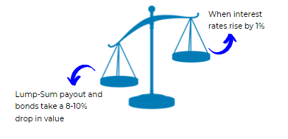
image-png-Nov-04-2021-05-38-59-09-PM-1

Each person’s situation is different, and a complimentary Cash Flow Analysis from The Retirement Group will show you how your pension choices stack up and play out over the course of your retirement years which may be two, three, four or more decades in retirement.

By knowing where you stand, you can make a more prudent decision regarding the optimal time to retire in your city, your state, and which pension distribution option best meets your needs.

Your 401k Plan

US-Bank-HTML-Your-401k-Plan

401k Savings Plan

Employees in your city, your state , especially those around the age of retirement age, are encouraged to enroll in a 401k savings plan as soon as it's offered. You may invest on a before-tax and/or an after-tax basis (regular or Roth) and choose out of numerous investment options, with varying degrees of risk. You can also roll over pre-tax and Roth amounts from other eligible plans.

Vesting
As a participant, you vest in the company match after three years. If you terminate employment with less than three years of service, you forfeit the company match, but keep the remainder.

In addition, if you have an account in an eligible plan of a former employer, you may be eligible to roll over a distribution from that account to the Verizon 401k plan .

Note: If you contribute at least 6% of your pay, you will receive a company match of 6% of your pay.

When you retire in your city, your state, if you have balances in your 401k plan, you will receive a Participant Distribution Notice in the mail. This notice will show the current value that you are eligible to receive from each plan and explain your distribution options. It will also tell you what you need to do to receive your final distribution. Please call The Retirement Group at (800)-900-5867 for more information and we can get you in front of a retirement-focused advisor as you approach retirement age.

Next Steps:

  • Watch for your Participant Distribution Notice and Special Tax Notice Regarding Plan Payments. These notices will help explain your options and what the federal tax implications may be for your vested account balance.
  • Read our guides: "What has Worked in Investing" & "8 Tenets when picking a Mutual Fund".
  • To learn about your distribution options, call The Retirement Group at (800)-900-5867.
  • Read our e-book for more information on "Rollover Strategies for 401ks".
  • Use the Online Beneficiary Designation to make updates to your beneficiary designations, if needed.


Verizon Savings Plan for Management Employees

The Verizon Savings Plan for Management Employees is a defined contribution plan that offers eligible employees the opportunity to save for retirement. For more information, see Verizon's Summary Plan Description (SPD).

Eligibility:

● Eligible Participants: Regular full-time or part-time employees, management employees, non-union hourly employees, and certain union-represented employees are eligible to participate in the Verizon Savings Plan. Specific exclusions apply, such as employees covered by a collective bargaining agreement (unless specifically included by the agreement), hourly-paid employees of non-participating Verizon affiliates, and non-resident aliens not receiving U.S. income.

Contributions:

● Employee Contributions: Employees may contribute between 1% and 50% of their eligible pay each pay period, with specific limits for highly compensated employees. Contributions can be made on a before-tax, after-tax, or Roth 401k basis, or a combination of these.

● Company Matching Contributions: Verizon matches $1 for every $1 contributed by the employee, up to 6% of eligible pay each pay period. Non-management participants may receive a different matching contribution formula.

● Profit Sharing: Depending on annual company performance, Verizon may also make a discretionary profit-sharing contribution of 0-3% of eligible pay.

Vesting:

● Employee Contributions: Employees are always 100% vested in their own contributions.

● Company Contributions: Vesting in company matching contributions and new profit-sharing awards occurs after three years of service. Certain conditions, such as qualifying for a company-sponsored severance plan or reaching normal retirement age, may result in automatic 100% vesting.

Investment Options:

● Investment Choices: Employees can invest their contributions and company matching contributions in various investment options offered under the plan. Investment elections can be changed at any time.

Loans and Withdrawals:

● Loans: Employees can borrow from their vested account balance, with loan amounts ranging from $1,000 to $50,000, limited to 50% of the vested account balance. Repayment occurs through payroll deductions.

● In-Service Withdrawals: Employees may take in-service withdrawals from after-tax contributions, vested company contributions, and rollover contributions, among others. Hardship withdrawals are allowed under specific IRS-defined circumstances.

Additional Features:

● Catch-Up Contributions: Employees aged 50 or older can make additional catch-up contributions beyond the standard contribution limits.

● Automatic Enrollment: New employees are automatically enrolled in the plan with a default contribution rate of 3% of eligible pay unless they choose otherwise.


Verizon 401k Savings Plan: Matching Contributions and Vesting

The Verizon 401k Savings Plan for Management Employees is designed to encourage employee savings by offering company matching contributions and a vesting schedule that rewards continued service.

Matching Contributions:

Verizon offers a competitive matching contribution to incentivize employee participation in the 401k plan. For every $1 that an eligible employee contributes to the plan, Verizon matches $1, up to 6% of the employee's eligible pay. This means that if an employee contributes 6% of their salary to the 401k, Verizon will contribute an additional 6%, effectively doubling the employee's contribution for that portion of their salary.

Sample Calculation:

● Employee Salary: $100,000 per year

● Employee Contribution: 6% of $100,000 = $6,000

● Verizon Matching Contribution: 6% of $100,000 = $6,000

In this example, the employee contributes $6,000, and Verizon matches this with an additional $6,000, resulting in a total annual contribution of $12,000 to the employee's 401k account.

Vesting Schedule:

Vesting refers to the process by which an employee earns the right to the full value of the company’s contributions to their 401k account. While employees are always 100% vested in their own contributions, vesting in Verizon's matching contributions occurs after a specific period of service.

For Verizon employees, vesting in the company's matching contributions and profit-sharing awards occurs after three years of service. This means that if an employee leaves the company before completing three years of service, they forfeit the matching contributions and any associated earnings.

Example of Vesting: Assume an employee has been with Verizon for two years and has received $12,000 in matching contributions over that period. If the employee leaves the company after two years, they would not be vested in the matching contributions and would forfeit the $12,000. However, if the employee completes three years of service, they would be fully vested and retain the full $12,000 plus any earnings on those contributions.

Over half of plan participants in your city, your state admit they don’t have the time, interest, or knowledge needed to manage their 401k portfolio. But the benefits of getting help go beyond convenience.

diversification-removebg-preview


A Charles Schwab study found several positive outcomes common to those using independent professional advice. They include:

  • Improved savings rates – 70% of participants who obtained 401k advice increased their contributions.
  • Increased diversification – Participants who managed their own portfolios invested in an average of just under four asset classes, while participants in advice-based portfolios invested in a minimum of eight asset classes.
  • Increased likelihood of staying the course – Getting advice raised the odds of participants staying true to their investment objectives, making them less reactive during volatile market conditions and more likely to remain in their original 401k investments during a downturn.


Don't try to do it alone. Get help with your company's 401k plan investments. Your nest egg will thank you.

Strategies to leverage your 401k before retirement

Did you know that there are ways you can tap into and leverage your 401k funds before retirement? Although these strategies may not apply to every situation, you may be able to use your 401k to bridge certain gaps in your financial plan.

Strategy #1. In-service withdrawals and 401k rollovers

An in-service withdrawal is when an employee takes money from their 401k while they're still employed. In-service withdrawals are a way to access money from your 401k early, and potentially roll it over into a different account type:
 
  1. Eligibility. In-service withdrawals are generally available to employees after they reach age 59 and a half, so they avoid the 10% early withdrawal penalty. However, some plans allow for earlier access to 401k funds under circumstances such as financial hardship.
  2. IRA rollover. These withdrawals are often used to roll over funds into an IRA or another retirement account while you're still employed. A direct rollover can avoid the 10% early withdrawal penalty, as well as any mandatory tax withholding. Rolling over your 401k into an IRA is a popular option for those looking for more control over their retirement savings. While your 401k might limit investment choices, IRAs often offer a broader range of investments.
  3. Tax implications. If your in-service withdrawal is not rolled over into an IRA, you may face income tax on the amount withdrawn.

It’s important to know that certain withdrawals are subject to regular federal income tax and you may also be subject to an additional 10% penalty tax depending on your age.

You can determine if you’re eligible for a withdrawal, and request one, online or by calling the Verizon Benefits Center in the United States. Your plan summary outlines more information and possible restrictions on rollovers and withdrawals.

You should also know that the plan administrator reserves the right to modify the rules regarding withdrawals at any time, and may further restrict or limit the availability of withdrawals for administrative or other reasons. All plan participants will be advised of any such restrictions, which apply equally to all Verizon employees.

Strategy #2. Borrowing from your 401k

If you need money quickly due to a job loss, serious health emergency, or other reason, borrowing from your 401k can be an option.

Banks will make you jump through many hoops for a personal loan, and credit cards charge too much interest... If these are the only options for much-needed cash, your 401k balance might start looking like a usable asset.

Unlike an in-service withdrawal, a loan must be paid back. However, they are not taxable (unless you fail to repay them). Yet, despite the potential benefits, taking a loan from your 401k may also come with some drawbacks.

  1. Borrowing from the future. First and foremost, you may be setting your retirement plan back by some time if you take money from your future and use it today.
  2. Lost growth potential. Even though you'll repay the loan, those funds will miss out on potential growth through investments during the repayment period. This can create a gap in your portfolio, especially if the market performs well while your money is out of the account.
  3. Repayment issues. If you leave your employer or lose your job, you may be forced to pay the full loan within a short timeframe. If you're unable to, the loan can be treated as an early withdrawal and be penalized and taxed as such.

Borrowing from your 401k should be considered a last resort. If you're concerned that you may need to take a loan from your 401k to make ends meet, reach out to an advisor at The Retirement Group today.

Net Unrealized Appreciation (NUA)

When you qualify for a distribution from your 401k plan, you have three options:Pads with color diagrams and color shining on background-3

  • Roll over your qualified plan to an IRA and continue deferring taxes.
  • Take a distribution and pay ordinary income tax on the full amount.
  • Take advantage of NUA and reap the benefits of a more favorable tax structure on gains.


How does Net Unrealized Appreciation work?

A NUA strategy may be beneficial for employees who hold highly-appreciated Verizon stock. To apply this strategy, you must first be eligible for a distribution from your qualified company-sponsored plan., which typically happens at retirement age. Generally, you would take a lump sum distribution from the plan, distributing all assets from the plan during a one-year period. The portion of the plan that is made up of mutual funds and other investments can be rolled into an IRA for further tax deferral. The highly appreciated company stock is then transferred to a non-retirement account.


The tax benefit comes when you transfer the company stock from a tax-deferred account to a taxable account. At this time, you apply NUA and you incur an ordinary income tax liability on only the cost basis of your stock. The appreciated value of the stock above its basis is not taxed at the higher ordinary income tax but at the lower long-term capital gains rate, currently 15%. This could mean a potential savings of over 30%.

You may be interested in learning more about NUA with a complimentary one-on-one session with a financial advisor from The Retirement Group.

IRA Withdrawal
IRA

Your retirement assets may be spread across several retirement accounts: IRAs, 401ks, taxable accounts, and others.

So, what is the most efficient way to take your retirement income after leaving Verizon?

This question relates to something called withdrawal sequencing, and it's a problem we're well-equipped to handle at The Retirement Group.

You may want to consider meeting your income needs in retirement by first drawing down taxable accounts rather than tax-deferred accounts. This may help your retirement assets with Verizon last longer as they continue to potentially grow tax deferred.

You will also need to plan to take the required minimum distributions (RMDs) from any company-sponsored retirement plans and traditional or rollover IRA accounts, which begin at age 73.

Two flexible distribution options for your IRA

When you need to draw on your IRA for income or to take your RMDs, you have a few choices. Regardless of what you choose, IRA distributions are subject to income taxes and may be subject to penalties and other conditions if you’re under 59½.

Partial withdrawals: Withdraw any amount from your IRA at any time. If you’re 73 or over, you’ll have to take at least enough from one or more IRAs to meet your annual RMD.

Systematic withdrawal plans: Structure regular, automatic withdrawals from your IRA by choosing the amount and frequency to meet your income needs after retiring from Verizon. If you’re under 59½, you may be subject to a 10% early withdrawal penalty (unless your withdrawal plan meets Code Section 72(t) rules).

Your tax advisor can help you understand distribution options, determine RMD requirements, calculate RMDs, and set up a systematic withdrawal plan.


Your Benefits

XOM-HTML-Your-Benefits

HSAs

Health Savings Accounts (HSAs) are often celebrated for their utility in managing health care expenses, particularly for those with high-deductible health plans in your city, your state. However, their benefits extend beyond medical cost management, positioning HSAs as a potentially superior retirement savings vehicle compared to traditional retirement plans like 401ks, especially after employer matching contributions are maxed out.

Understanding HSAs

HSAs are tax-advantaged accounts designed for individuals with high-deductible health insurance plans. For 2026, the IRS defines high-deductible plans as those with a minimum deductible of $1,700 for individuals and $3,400 for families. HSAs allow pre-tax contributions, tax-free growth of investments, and tax-free withdrawals for qualified medical expenses - making them a triple-tax-advantaged account.

The annual contribution limits for HSAs in 2026 are $4,400 for individuals and $8,750 for families, with an additional $1,000 allowed for those aged 55 and older. Unlike Flexible Spending Accounts (FSAs), HSA funds do not expire at the end of the year; they accumulate and can be carried over indefinitely.

Comparing HSAs to 401(k)s Post-Matching

Once an employer's maximum match in a 401(k) is reached, further contributions yield diminished immediate financial benefits. This is where HSAs can become a strategic complement. While 401(k)s offer tax-deferred growth and tax-deductible contributions, their withdrawals are taxable. HSAs, in contrast, provide tax-free withdrawals for medical expenses, which can be a significant portion of retirement costs.

HSAs as a Retirement Tool

Post age 65, the HSA flexes its muscles as a robust retirement tool. Funds can be withdrawn for any purpose, subject only to regular income tax if used for non-medical expenses. This flexibility is similar to that of traditional retirement accounts, but with the added advantage of tax-free withdrawals for medical costs - a tangible benefit given the odds of facing rising health care expenses in retirement.

Furthermore, HSAs do not have Required Minimum Distributions (RMDs), unlike 401(k)s and Traditional IRAs, offering more control over tax planning in retirement. This makes HSAs particularly advantageous for those who might not need to tap into their savings immediately at retirement or who want to minimize their taxable income.

Investment Strategy for HSAs

Initially, it's prudent to invest conservatively within an HSA, focusing on maintaining sufficient liquid funds to cover near-term deductibles and other out-of-pocket medical expenses. However, once a financial cushion is established, treating the HSA like a retirement account by investing in a diversified mix of stocks and bonds can enhance the account's growth potential over the long term.

Using HSAs in Retirement

In retirement, HSAs can cover a range of expenses:

  • Health Care Costs-Pre Medicare: HSAs can pay for health care costs to bridge you to Medicare.
  • Health Care Costs-Post Medicare: HSAs can pay for Medicare premiums and out-of-pocket medical costs, including dental and vision, which are often not covered by Medicare.
  • Long-term Care: Funds can be used for qualified long-term care services and insurance premiums.
  • Non-medical Expenses: After age 65, HSA funds can be used for non-medical expenses without incurring penalties, although these withdrawals are subject to income tax.


The Bottom Line

HSAs offer unique advantages that can make them a superior option for retirement savings, particularly after the benefits of 401k matching are maximized. Their flexibility in fund use, coupled with tax advantages, makes HSAs a key component of a comprehensive retirement strategy. By strategically managing contributions and withdrawals, individuals can enhance both their medical and financial well-being.

What Happens If Your Employment Ends?

Your life insurance coverage and any optional coverage you purchase for your spouse/domestic partner and/or children ends on the date your employment with Verizon  ends, unless your employment ends due to disability. If you die within 31 days of your termination date, benefits are paid to your beneficiary for your basic life insurance, as well as any additional life insurance coverage you elected.

Note:
  • You may have the option to convert your life insurance to an individual policy or elect portability on any optional coverage.
  • If you stop paying supplementary contributions, your coverage will end.
  • If you are at least 65 and you pay for supplemental life insurance, you should receive information in the mail from the insurance company that explains your options.
  • Make sure to update your beneficiaries. See your company's SPD for more details.
Beneficiary Designations
 
As part of your retirement and estate planning, it’s important to name someone to receive the proceeds of your benefit programs in the event of your death. That’s how Verizon will know to whom to send your final compensation and benefits. This can include life insurance payouts and any pension or savings balances you may have.

Next Step:
  • When you retire, make sure that you update your beneficiaries, and update the Beneficiary Designation form for life events such as death, marriage, divorce, childbirth, adoptions, etc.


Social Security & Medicare

NGC-HTML-Social-Security-Medicare

Claiming Social Security is one thing, understanding how your claim works is something else entirely. Understanding Social Security is a difficult but crucial step in assessing your retirement paycheck. For many Americans, Social Security benefits are core to their retirement income strategy. However, when and why you claim them depends on your overall withdrawal strategy.

To help you make an informed decision, let's explore three main steps you should follow to solidify your Social Security strategy at Verizon:

Step 1. Decide when to claim your Social Security benefits

Social Security benefits can be significant, but at the end of the day, they're just one part of your overall financial picture. When considering the timing of your claim, keep this general principle in mind: The later you begin receiving benefits, the larger those benefits will be.

The full monthly Social Security retirement benefit is based on applying at the Full Retirement Age (FRA), which is age 67 for those born 1960 or later. For every year you wait after you reach the FRA, your benefit amount increases 8%. It reaches a maximum at age 70. If we do the math, we can determine that, if you start claiming at age 70, your monthly benefit will be 124% the full benefit.

However, you can also apply before you reach FRA, as early as age 62. You will receive a reduced benefit if you do so, but this option could make sense for those who want to start claiming their benefit earlier for longevity reasons.
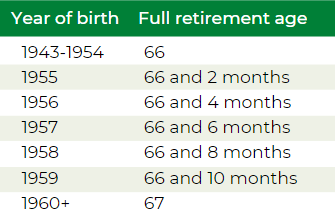
image-png-Nov-04-2021-06-08-27-51-PM

Step 2. Understand the tax implications

For all but the lowest-income retirees, Social Security benefits are actually taxable. Only individuals with provisional income under $25,000, or $32,000 if married filing jointly, receive their benefits tax-free. Otherwise, up to 85% of your benefits will be treated as taxable income.

Furthermore, depending on where you live, your Social Security benefits may even be taxed at the state level. If you plan to move for retirement, the tax regime in the state you're moving to can be a relevant consideration.

Step 3. Start preparing today

Even if your retirement is right around the corner, you can make decisions today that will impact you for years, or decades, to come. For instance, delaying your Social Security claiming date even a year or two can snowball into a significant benefit. To bridge the gap between their retirement date and their claiming date, some people create a "slush fund" while they're working to take the place of the Social Security benefits they would receive from claiming at FRA. Whether these funds come from a 401k, IRA, or brokerage account, integrating a bit of extra padding in your planning can pay off in the long run.
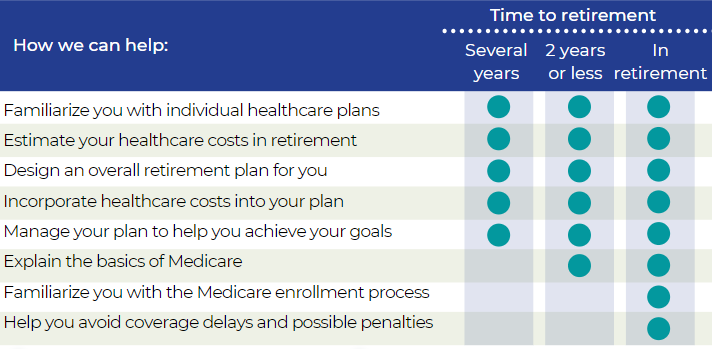
Always remember, your Social Security benefit is just one part of your overall financial picture. And when you start to consider tax implications, withdrawal sequencing, and effective diversification (beyond just the asset class), the picture can start to get complicated. That's what we're here to help with. At The Retirement Group, we've been assisting Verizon employees to and through retirement for years. If you're interested in speaking with an experienced advisor who's been through the process before, reach out today.

Schedule a Call


Medicare Coverage for Retirees

Are you eligible for Medicare or will be soon? If you or your dependents are eligible after you leave Verizon, Medicare generally becomes the primary coverage for you or any of your dependents as soon as they are eligible for Medicare. This will affect your company-provided medical benefits.

It's your responsibility to enroll in Medicare Parts A and B when you first become eligible, and you must stay enrolled to have coverage for Medicare-eligible expenses. This applies to your Medicare-eligible dependents as well.
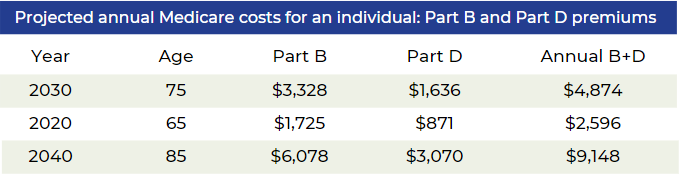
If you don’t enroll in Medicare Parts A and B, your provider can bill you for the amounts that are not paid by Medicare, which could make your out-of-pocket expenses significantly higher.
 

image-png-Nov-04-2021-06-10-31-71-PM

 
You should know how your retiree medical plan choices or Medicare eligibility impact your plan options. Before you retire, contact the U.S. Social Security Administration directly at 800-772-1213, call your local Social Security Office, or visit ssa.gov.


The Reality of Medical Costs in Retirement

According to the Employee Benefit Research Institute (EBRI), Medicare will only cover about 60% of an individual’s medical expenses. This means a 65-year-old couple, with average prescription-drug expenses for their age, will need $259,000 in savings to have a 90% chance of covering their health care expenses. A single male will need $124,000 and a single female, thanks to her longer life expectancy, will need $140,000.
 
Numbers like these aren't meant to scare you; rather, they're here to inform you about the realities of health care in retirement. A sound retirement income plan, coupled with comprehensive, holistic integration with your overall financial plan, can help you prepare for health care costs after you retire. If you have concerns about your Verizon health care plan or want an experienced set of eyes to look over your options, don't hesitate to reach out

Divorce

XOM-HTML-Divorce
 
The ideas of happily ever after and until death do us part won’t happen for 28% of couples over the retirement age. Many of these couples saved together for decades, assuming they would retire together. After a divorce, they face the expenses of a pre-or post-retirement life, but with half their savings.

If you’re divorced or in the process of divorcing, your former spouse(s) may have an interest in a portion of your retirement benefits from your company. Before you can start your pension - and for each former spouse who may have an interest - you’ll need to provide Verizon with the following documentation, regardless of how old the divorce or how short the marriage:
 
  • A copy of the court-filed Judgment of Dissolution or Judgment of Divorce along with any Marital Settlement Agreement (MSA)
  • A copy of the court-filed Qualified Domestic Relations Order (QDRO)


For more information on strategies you can adopt if divorce is affecting your retirement benefits, please give us a call.

Social Security and Divorce
You can apply for a divorced spouse’s benefit if the following criteria are met:
 
1. You’re at least 62 years of age.
2. You were married for at least 10 years prior to the divorce.
3. You are currently unmarried.
4. Your ex-spouse is entitled to Social Security benefits.
5. Your own Social Security benefit amount is less than your spousal benefit amount, which is equal to one-half of what your ex’s full benefit amount would be if claimed at Full Retirement Age (FRA).
 
Unlike with a married couple, your ex-spouse doesn’t have to have filed for Social Security before you can apply for your divorced spouse’s benefit, but this only applies if you’ve been divorced for at least two years and your ex is at least 62 years of age. If the divorce was less than two years ago, your ex must already be receiving benefits before you can file as a divorced spouse.


Unlike with a married couple, your ex-spouse doesn’t have to have filed for Social Security before you can apply for your divorced spouse’s benefit.

Divorce doesn’t disqualify you from survivor benefits. You can claim a divorced spouse’s survivor benefit if:

  • Your ex-spouse is deceased.
  • You are at least 60 years of age.
  • You were married for at least 10 years prior to the divorce.
  • You are single (or you remarried after age 60).

In the process of divorcing?

If your divorce isn’t final before your retirement date from Verizon, you’re still considered married. You have two options:

  • Retire before your divorce is final and elect a joint pension of at least 50% with your spouse, or get your spouse’s signed, notarized consent to a different election or lump sum.
  • Delay your retirement until after your divorce is final and you can provide the required divorce documentation.*


Sources: The Retirement Group, “Retirement Plans - Benefits and Savings.”; U.S. Department of Labor, 2024; “Divorced: See how to claim your Social Security benefit,” Fidelity, 2025 

Survivor Checklist

TRI-HTML-Checklist

If you pass away before collecting your retirement benefits, your surviving loved ones must be prepared to take action. It will be their responsibility to collect their survivor benefits. By following the tips in these three sections, you can prepare your loved ones to make the most of the benefits that they're entitled to:

In the event of your death:

  • Report your death. Your spouse, a family member, or even a friend should call Verizon's benefits service center as soon as possible to report your death.

  • Collect life insurance benefits. Your spouse, or other named beneficiary, will need to call Verizon's benefits service center to collect life insurance benefits.

If you have a joint pension:

  • Start the joint pension payments. The joint pension is not automatic. Your joint pensioner will need to complete and return the paperwork from Verizon's pension center to start receiving joint pension payments.

  • Be prepared financially to cover living expenses. Your spouse will need to be prepared with enough savings to bridge at least one month between the end of your pension payments from your company and the beginning of his or her own pension payments.

If your survivor has medical coverage through Verizon:

  • Decide whether to keep medical coverage.

  • If your survivor is enrolled as a dependent in your company-sponsored retiree medical coverage when you die, he or she needs to decide whether to keep it. Survivors have to pay the full monthly premium. This decision can be particularly impactful if you are around the age of retirement age.

Life After Your Career

TRG-HTML-Life-After-Career-Aug-30-2022-05-40-26-09-PM
 
While you may be ready for some rest and relaxation, without the stress and schedule of your full-time career with Verizon, it may make sense to you financially, and emotionally, to continue to work.
Financial benefits of working

Make up for decreased value of savings or investments. Low interest rates may be  great for lump sum payouts but they  make it harder to  generate portfolio income. Some people continue to work to make up for poor performance of their savings and investments.

Maybe you took an offer from your company and left earlier than you wanted with less retirement savings than you needed. Instead of drawing down savings, you may decide to work a little longer to pay for extras you’ve always denied yourself in the past.

Meet the financial requirements of day-to-day living. Expenses can increase during your retirement in your city, your state and working can be a logical and effective solution. You might choose to continue working to keep your insurance or other benefits, or you may be able to get low-cost health insurance for part-time workers.

Emotional benefits of working

You might find yourself with very tempting job opportunities at a time when you thought you’d be withdrawing from the workforce in your city, your state.

Staying active and involved. Retaining employment after your previous job, even if it’s just part-time, can be a great way to use the skills you’ve worked so hard to build over the years and keep up with friends and colleagues.

Enjoying yourself at work. Just because the government has set a retirement age with its Social Security program doesn’t mean you have to schedule your own life that way. Many people genuinely enjoy their employment and continue working because their jobs enrich their lives.


Verizon employees interested in planning their retirement may benefit from live webinars hosted by experienced financial advisors. Click here to register for our upcoming webinars.

Sources

Sources (graphic)6