New Update: Rising Oil Costs are Affecting Retirement Plans. Will you be impacted?
Retirement Guide for Sysco Employees: Tax Rates & Inflation
Barron’s: Awarded on 9/12/2025 (Mega RIA) for 6/30/24-6/30/25. Paid for logo use. Forbes: Awarded 10/1/25 for 3/31/24-3/31/25. Paid for logo use. USA Today: Awarded 4/15/26 for the five-year period ending January 2026. Paid for logo use.
/General/General%2012.png?width=1280&height=853&name=General%2012.png)
Oil prices between $50 and $120 per barrel with 80% annualized volatility have created ripple effects throughout the economy over the past six months. Elevated oil prices contribute to inflationary pressure that affects interest rates, corporate borrowing costs, and equity market multiples across all sectors. For Sysco employees, this means that retirement account performance, mortgage rates, and even the purchasing power of future pension income can all be influenced by sustained energy market volatility. Tax planning at Sysco benefits from understanding how energy-driven market movements create opportunities for timing capital gains, Roth conversions, and strategic loss harvesting. Consulting with a financial advisor can help you understand how energy conditions affect your specific situation and build a plan that adapts accordingly.

With wrapped up and going into the new year, the IRS just released Revenue Procedure -45 and Notice -61 which detail the tax changes and cost of living adjustments for . The main points of this new release that will most likely affect Sysco employees would be:
- This year, the tax filing deadline is on April 18, instead of the typical April 15.
- The standard deduction for married couples filing jointly for the current tax year rises to $32,200 up $800 from the prior year.
- For single taxpayers and married individuals filing separately, the standard deduction rises to $12,950 for , up $400, and for heads of households, the standard deduction will be $19,400 for the current tax year up $600.
Also, the personal exemption for the current tax year remains at 0, as it was for . This elimination of the personal exemption was a provision in the Tax Cuts and Jobs Act.
If you experienced a job change, retirement or lapse in employment from Sysco, the “lookback†rule may be an important option to consider when filing taxes this year. You’ll also have the option to use your earned income for your return thanks to changes from the American Rescue Plan Act. This rule is mainly used for calculation of the Earned Income Tax Credit and the Child Tax Credit.
Remote workers employed by Sysco might face double taxation on state taxes. Due to the pandemic, many employees moved back home which could have been outside of the state where they were employed. Last year, some states had temporary relief provisions to avoid double taxation of income, but many of those provisions have expired. There are only six states that currently have a ‘special convenience of employer’ rule: Connecticut, Delaware, Nebraska, New Jersey, New York, and Pennsylvania. If you work remotely for Sysco, and if you don't currently reside in those states, consult with your tax advisor if there are other ways to mitigate the double taxation.
Retirement account contributions: Contributing to your Sysco 401k plan can cut your tax bill significantly, and the amount you can save has increased for . In , the IRS has raised the contribution limit for a 401k to $24,500 - up by $1,000. Meanwhile, Sysco workers who are older than 50 years old are eligible for an extra catch-up contribution of $6,500.
There are important changes for the Earned Income Tax Credit (EITC) that you, as a taxpayer employed by Sysco, should know:
- The income threshold has been increased for single filers with no children; the American Rescue Plan Act temporarily boosted it from $543 to $1,502 in ; this expansion has not been carried over to the tax year.
- Married taxpayers filing separately can qualify: You can claim the EITC as a married filing separately if you meet other qualifications. This wasn't available in previous years.
Increased deduction for cash charitable contributions: In years past, the threshold was $300 for both single and joint filers, but in that changed to $300 for single filers and up to $600 for joint filers.
Child Tax Credit changes:
- A $2,000 credit per dependent under age seventeen..
- Income thresholds of $400,000 for married couples and $200,000 for all other filers (single taxpayers and heads of households).
- A 70 percent, partial refundability affecting individuals whose tax bill falls below the credit amount.
Tax Brackets
-png.png?width=575&name=image%20(18)-png.png)
Inflation reduces purchasing power over time as the same basket of goods will cost more as prices rise. In order to maintain the same standard of living throughout your retirement after leaving Sysco, you will have to factor rising costs into your plan. While the Federal reserve strives to achieve 2% inflation rate each year, in that rate shot up to 7% a drastic increase from ’s 1.4%. While prices as a whole have risen dramatically, there are specific areas to pay attention to if you are nearing or in retirement from Sysco, like healthcare. Many Sysco corporate retirees depend on Medicare as their main health care provider and in that healthcare out-of-pocket premium is set to increase by 14.5%. In addition to Medicare increases, the cost of over-the-counter medications is also projected to increase by at least 10%. The Employee Benefit Research Institute (ERBI) found in their report that couples with average drug expenses would need $296,000 in savings just to cover those expenses in retirement. It is crucial to take all of these factors into consideration when constructing your holistic plan for retirement from Sysco.
*Source: IRS.gov, Yahoo, Bankrate
Blogs You May Enjoy:






A Roth IRA conversion decision hinges on your full tax picture, including the employer benefits Sysco provides. According to publicly available information, Sysco maintains an active defined benefit pension plan, which provides retirement income based on factors such as years of service and compensation history. Sysco also offers retiree healthcare benefits to eligible employees, which can provide meaningful coverage for those who retire before reaching Medicare eligibility at age 65. Because the specifics of your pension formula, vesting schedule, and benefit eligibility depend on your individual employment history and plan documents, We encourage you to review your Summary Plan Description (SPD) or speak with Sysco's HR or benefits team for the most current details.
Source: Is it Worth the Money to Hire a Financial Advisor?, the balance, 202
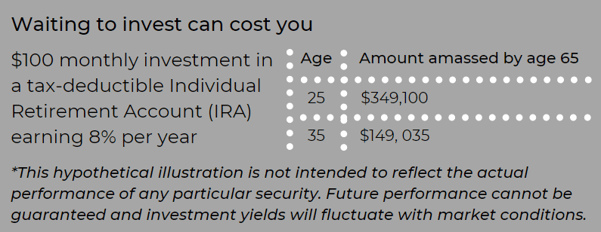
Starting to save as early as possible matters. Time on your side means compounding can have significant impacts on your future savings. And, once you’ve started, continuing to increase and maximize your contributions for your Sysco 401(k) plan is key.


Highest Average Earnings is the monthly average of your regular earnings for the 36 consecutive months in which they’re the highest.
In most cases, this will be the sum of your last 36 months divided by 36.
The applicable interest rate is a separate average of each of the three segment rates for the fifth, fourth and third months preceding your annuity start date. The three segment rates are calculated by the IRS according to regulations that are also part of the Pension Protection Act of and reflect the yields of short-, mid-, and long-term corporate bonds. (Note: Chevron also has Legacy Unocal and Legacy Texaco Retirement Plans)
Different Plans
Similar to Chevron, AT&T has many different plans available. With AT&T, they have different pension plan formulas for management & non-management. Lets look at a sample non-management plan.
AT&T non-management employees have their own Craft/non-management pension plan. Let's take a look at a pension example for a gentleman by the name of Joe Smith who is hourly and using the Craft/non-management pension plan.
In 1990, Joe is hired by AT&T and participates in the Craft Pension Plan:
Craft Pension Plan
- Craft has a defined benefit plan that uses pension bands.
- A pension band determines your benefits based on your job title/grade level/occupation.
- Joe will receive a monthly dollar amount into his account for each year of service.
- Joe's benefit (pension band may change yearly).
- A pension band determines your benefits based on your job title/grade level/occupation.
Craft Pension Example
Let's assume Joe is working as a Cable Splicing Technician and is in Pension Band 120. He is interested in retiring this year, in and wants to calculate his Craft Pension benefit.

If a Pension is offered, Sysco's retirement plan will generally allow for different forms of payment:

Single Life Annuity
- The monthly Single Life Annuity is the benefit from which all of the optional forms of payment under the plan are derived.
- Pays a fixed amount each month for retiree’s lifetime.
- A death benefit may be payable to your beneficiary.
- A death benefit is payable if vested and employee dies before employment with Sysco ends or start of receiving benefits.
Lump-Sum Option (Most Oil Companies Offer a Lump Sum)
- Lump-sum payment is actuarially equivalent to the total annuity you would have received as a Single Life Annuity during your lifetime.
- Calculated using actuarial factors based on your age and the interest rate in effect on your annuity starting date.
- No death benefits are payable.
NOTE: Lump-Sum vs. Annuity -Â With decreasing interest rates, your lump-sum payout will increase.
Life & Term-Certain Annuity Option
- Smaller than the Single Life Annuity.
- 5, 10, or 15 year period certain.
- If you have multiple beneficiaries or if your beneficiary is your estate or trust, remaining payments converted actuarially to a lump-sum.
- No death benefits are payable.
Looking for a second opinion about your retirement from Sysco? Click here to speak to financial advisor today or call (800) 200-9838.
Joint & Survivor Annuity
Upon your death, a percentage of your monthly benefit is paid to your joint annuitant for his or her lifetime
Reduction factors may apply depending on Sysco's policy.
Uniform Income
Receive same level of income before and after receiving Social Security benefits
The level of income may change at a certain age. For example, in the Chevron Uniform Income policy:
Before age 62, employees receive a larger monthly annuity from the plan
After age 62, when Social Security benefit is available, employees receive a smaller monthly annuity from the plan
Each company has varying rules in regards to Uniform Income. Review Sysco's SPD or talk to an advisor to find out the rules for your specific plan.
*These are examples and Sysco's plan may be different.
Interest Rates and Life Expectancy
In many defined benefit plans, like the ExxonMobil pension plan, current and future retirees are offered a lump-sum payout or a monthly pension benefit. Sometimes these plans have billions of dollars worth of unfunded pension liabilities, and in order to get the liability off the books, Sysco may offer a lump-sum.
Depending on life expectancy, the initial lump-sum is typically less money than regular pension payments over a normal retirement time frame. However, most individuals that opt for the lump-sum plan to invest the majority of the proceeds, as most of the funds aren't needed immediately after retirement from Sysco.
Something else to keep in mind is that current interest rates, as well as your life expectancy at retirement, have an impact on lump-sum payout options of Sysco defined benefit pension plans. Lump-sum payouts are typically higher in a low interest rate environment, but be careful because lump-sums decrease in a rising interest rate environment.
Additionally, projected pension lump-sum benefits for active Sysco employees will often decrease as an employee ages and their life expectancy decreases. This can potentially be a detriment of continuing to work, so it is important that you run your pension numbers often and thoroughly understand the impact that timing has on your benefit. Other factors such as income needs, need for survivor benefits, and tax liabilities often dictate the decision to take the lump-sum over the annuity option on the pension.




They can help determine your eligibility, get you and/or your eligible dependents enrolled in Medicare or provide you with other government program information. For more in-depth information on Social Security, please call us.

Check the status of your Social Security benefits before you retire from Sysco. Contact the U.S. Social Security Administration, your local Social Security office, or visit ssa.gov.
Are you eligible for Medicare or will be soon?
If you or your dependents are eligible after you leave your telecom industry company, Medicare generally becomes the primary coverage for you or any of your dependents as soon as they are eligible for Medicare. This will affect Sysco-provided medical benefits.
You and your Medicare-eligible dependents must enroll in Medicare Parts A and B when you first become eligible. Medical and MH/SA benefits payable under the Sysco-sponsored plan will be reduced by the amounts Medicare Parts A and B would have paid whether you actually enroll in them or not.
For details on coordination of benefits, refer to Sysco's summary plan description.
If you or your eligible dependent don’t enroll in Medicare Parts A and B, your provider can bill you for the amounts that are not paid by Medicare or your Sysco-specific medical plan … making your out-of-pocket expenses significantly higher.

According to the Employee Benefit Research Institute (EBRI), Medicare will only cover about 60% of an individual’s medical expenses. This means a 65-year-old couple, with average prescription-drug expenses for their age, will need $259,000 in savings to have a 90% chance of covering their healthcare expenses. A single male will need $124,000 and a single female, thanks to her longer life expectancy, will need $140,000.
Check Sysco's plan summary to see if you’re eligible to enroll in Medicare Parts A and B.

If you become Medicare-eligible for reasons other than age, you must contact Sysco’s benefit center about your status.



https://www.irs.gov/newsroom/irs-provides-tax-inflation-adjustments-for-tax-year-
https://news.yahoo.com/taxes--important-changes-to-know-164333287.html
https://www.nerdwallet.com/article/taxes/federal-income-tax-brackets
https://www.bankrate.com/taxes/child-tax-credit--what-to-know/
What type of retirement plan does Sysco offer to its employees?
Sysco offers a 401(k) Savings Plan to help employees save for retirement.
Does Sysco provide a matching contribution for its 401(k) plan?
Yes, Sysco provides a matching contribution to the 401(k) plan, which helps employees increase their retirement savings.
At what age can Sysco employees start participating in the 401(k) Savings Plan?
Sysco employees can typically start participating in the 401(k) Savings Plan as soon as they meet the eligibility requirements, usually at age 21.
How can Sysco employees enroll in the 401(k) Savings Plan?
Sysco employees can enroll in the 401(k) Savings Plan through the company’s benefits portal or by contacting the HR department for assistance.
What investment options are available in Sysco's 401(k) Savings Plan?
Sysco's 401(k) Savings Plan offers a variety of investment options, including mutual funds, target-date funds, and company stock.
How much can Sysco employees contribute to their 401(k) plan each year?
Sysco employees can contribute up to the IRS limit for 401(k) contributions, which is adjusted annually.
Does Sysco allow employees to take loans from their 401(k) Savings Plan?
Yes, Sysco allows employees to take loans from their 401(k) Savings Plan under certain conditions.
What happens to a Sysco employee's 401(k) account if they leave the company?
If a Sysco employee leaves the company, they can choose to roll over their 401(k) account to another retirement plan, cash out, or leave it with Sysco.
Can Sysco employees change their contribution percentage to the 401(k) plan?
Yes, Sysco employees can change their contribution percentage to the 401(k) plan at any time, subject to certain guidelines.
Is there a vesting schedule for Sysco's matching contributions to the 401(k) plan?
Yes, Sysco has a vesting schedule for its matching contributions, meaning employees must work for a certain period before they fully own those contributions.

For more information you can reach the plan administrator for Sysco at 1390 enclave pkwy Houston, TX 77077; or by calling them at 1-281-584-1390.
https://www.sysco.com/documents/pension-plan-2022.pdf - Page 5, https://www.sysco.com/documents/pension-plan-2023.pdf - Page 12, https://www.sysco.com/documents/pension-plan-2024.pdf - Page 15, https://www.sysco.com/documents/401k-plan-2022.pdf - Page 8, https://www.sysco.com/documents/401k-plan-2023.pdf - Page 22, https://www.sysco.com/documents/401k-plan-2024.pdf - Page 28, https://www.sysco.com/documents/rsu-plan-2022.pdf - Page 20, https://www.sysco.com/documents/rsu-plan-2023.pdf - Page 14, https://www.sysco.com/documents/rsu-plan-2024.pdf - Page 17, https://www.sysco.com/documents/healthcare-plan-2022.pdf - Page 23
Help shape our next stories
Choose the topics you’d love to read more about. Your input helps us focus on content that matters to you.